

Our mechanic Dinant is proud of his recent assembly job, another two MegaFlow propeller pumps ready for use. But what are they for?
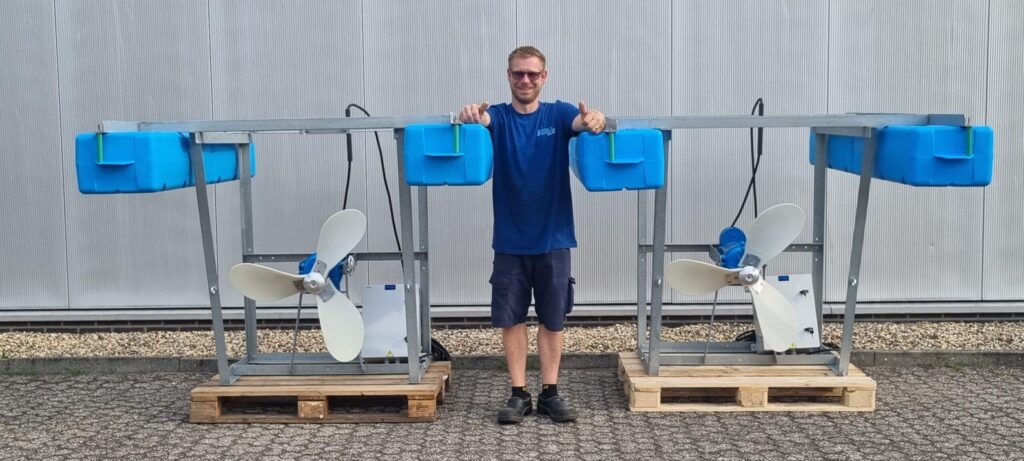
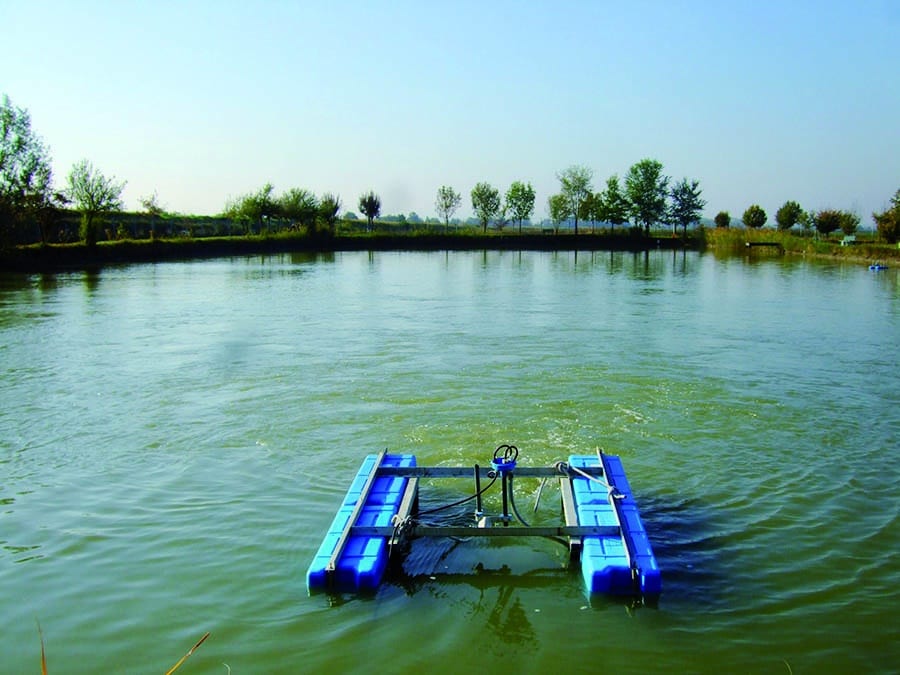
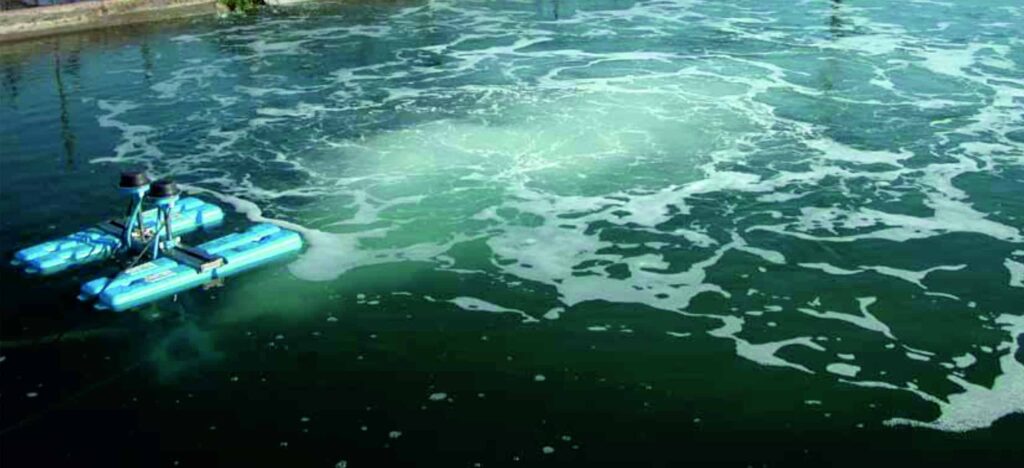
AUGA MegaFlow Propeller Pumps set water in motion. With only 1.5 kW of motor power, each unit moves about 3,000 m3 of water per hour! And that is badly needed to get large -often stagnant- bodies of water moving. Why this is necessary, we are happy to explain.
There is growing coverage of the quality of public waters, unfortunately not always in a positive sense. Causes vary, but climate change is taking its share of the blame. Rising temperatures and heavy downpours are affecting water quality and causing problems.
A wide variety of surface waters exist, including still and running water, fresh, salt and brackish water, waters that may or may not be isolated and ranging in size from small ditches to very large lakes.
The top layer of stagnant or poorly flowing water heats up quickly when the outside temperature peaks. Fish die from lack of oxygen, water that stinks, mosquito infestations and excessive algae growth are the most common – and recurring – problems with public waters in cities and parks and with (swimming) water at campsites and recreation areas. These can even face a swimming ban if a blue-green algae infestation emerges, a highly undesirable and unhealthy situation.
In urban environments, rainwater is still frequently discharged through the sewer system that becomes overloaded during a heavy downpour, resulting in emergency overflows that discharge into public water. The discharged rain/sewer water leads to an acute oxygen dip in the water with fish dying en masse. In such acute situations, the fire department must turn up to use pumps to get the water moving for oxygen enrichment. A permanent solution to improve water quality is the better option.
The two MegaFlow propeller pumps that our technician enjoyed putting together are for a Belgian project to move a huge pond that has an annual problem with duckweed. The MegaFlow devices are part of an overall plan to permanently get rid of the persistent duckweed problem. A good impression of the enormous water displacement can be seen in the video, by clicking here