


Duckweed is a very protein-rich plant and may be the alternative food source in the near future. For many now, this fastest growing plant in the world is still a source of annoyance and very problematic for the ecosystem in public waters.
Dennis Philippi – from installation company A1 Group in ‘s Gravenzande – involved AUGA in a persistent recurring duckweed problem in the pond at Gro-Up. This organization operates nationwide in childcare, community work, care and education, with headquarters in Berkel en Rodenrijs.
The A1 Group supplies, assembles and maintains complete installations for horticulture and all other market segments where water is part of business processes. The company has already carried out several projects for AUGA. Located in the middle of the greenhouse area, A1 is involved with water on a daily basis. Dandruff control was new to them and presented this problem to AUGA.
Every year the pond at Gro-Up’s headquarters is covered with a thick layer of duckweed. Not only does it look unsightly, it also seriously disrupts the operation of the fountains and the quality of the water suffers. Gro-Up wanted to remedy this.
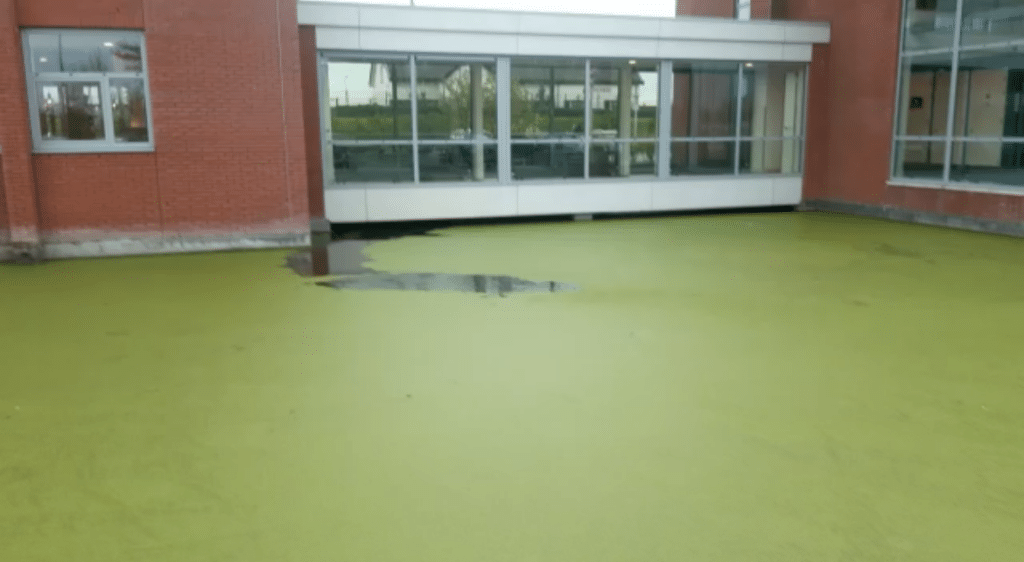
The brood carpet at Gro-Up in Berkel and Rodenrijs, not a pretty sight and deadly to the ecosystem.
Duckweed grows in nutrient-rich, particularly stagnant water. The narrower the water body, the greater the likelihood of duckweed formation. There is a relationship with the silt layer on the bottom, as it is the ideal breeding ground for duckweed. Turf blankets block light and air and are suffocating to other life in the water. Lack of oxygen causes fish death and odor problems. This process recurs every year if you don’t do anything about it.
Below the duckweed cover, only decomposition still takes place, which causes further expansion of the duckweed cover. This ultimately negatively affects the ecological system as well as the recreational value of a pond or water feature.
How do you get rid of duckweed?
The weedy plant feels very much at home in stagnant water and multiplies at lightning speed. The duckweed layer floats and does not attach to the bottom. Getting rid of it requires a good current in the water, which pushes the duckweed cover in one direction and makes it easy to remove and dispose of. If there is a connection to open water, the current pushes duckweed into open water, which of course works a lot easier.
These are the first steps to get rid of duckweed:
Good flow is achieved with FLOW Propeller Mixers. Water is moved over long distances to carry duckweed. In addition, the warm upper layer is also mixed with the colder lower layer to prevent algae growth.
FLOW mixers also prevent dirt build-up through organic breakdown of bottom debris, further combating the growth of duckweed.
Open spaces are created on the water and light can once again penetrate places where duckweed no longer floats. Aquatic life can develop again; the natural balance comes into balance.
Duckweed likes heat and light, so it is important to put FLOW mixers into operation before the growing season starts from April/May to September. These are the first steps to get rid of duckweed.
Next steps to prevent excessive duckweed growth:
Soil sludge is the ideal breeding ground for duckweed and harmful gas generation. Soil sludge results from dirt accumulations such as leaves, dead pond plants, fish droppings, and windblown and landed debris in general. In public waters, it is also possible for emergency overflows from sewer systems to open during heavy downpours.
Untreated sewage causes a huge dip in oxygen in the pond. Massive fish kills as a result are more the rule than the exception. All the organic pollution that enters a pond eventually forms a layer of silt, if the pond is not maintained. A great breeding ground for duckweed from which harmful gases also develop, extremely dangerous for fish and overall water quality.
With S-FLOW volume aerators, gases are carried up to 6 meters deep with a large volume of water to the surface to then return oxygen to the water. The aerators create a well-mixed and aerated zone around the unit.
Mixers and aerators are the perfect combination to dramatically and permanently improve overall water quality
Addressing the problems at Gro-Up:
A connection to open water was present at Gro-Up, but hardly any good flow. In the various inlets, water stood still and there duckweed could quickly spread. The fountains present (A through E in the illustration) were probably once devised to bring movement into the pond, but that is hardly possible with fountains.
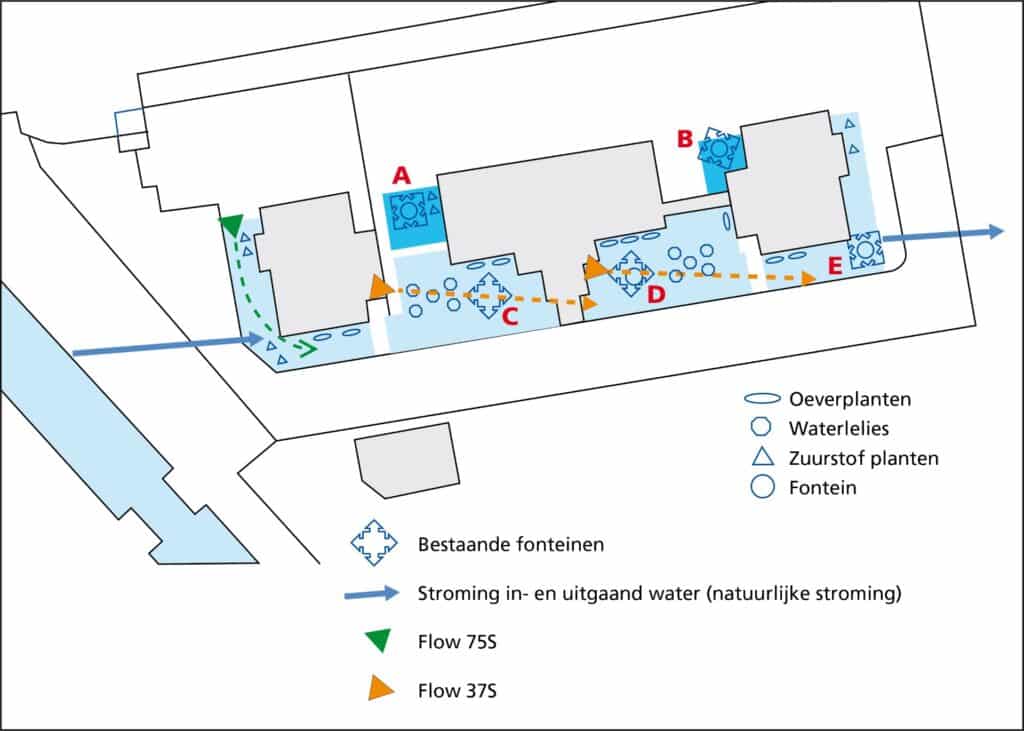
Our specialist visited the project and provided a detailed quote with advice on how best to address the duckweed problem and improve water quality.
A combination of FLOW mixers and S-FLOW aerators was chosen for this project.
Putting water in motion
To move the thick pack of duckweed at Gro-Up over greater distances, 3 FLOW propeller mixers were used.
Two mixers type FLOW 37S, with a motor power of only 0.37 kW each and one mixer type FLOW 75S with 0.75 kW power, were enough to do this job. The diagram shows the arrangement of the devices, which are used to agitate the stagnant water containing duckweed from the inlets.
Fixed mixers were used for this project because the water is shallow.
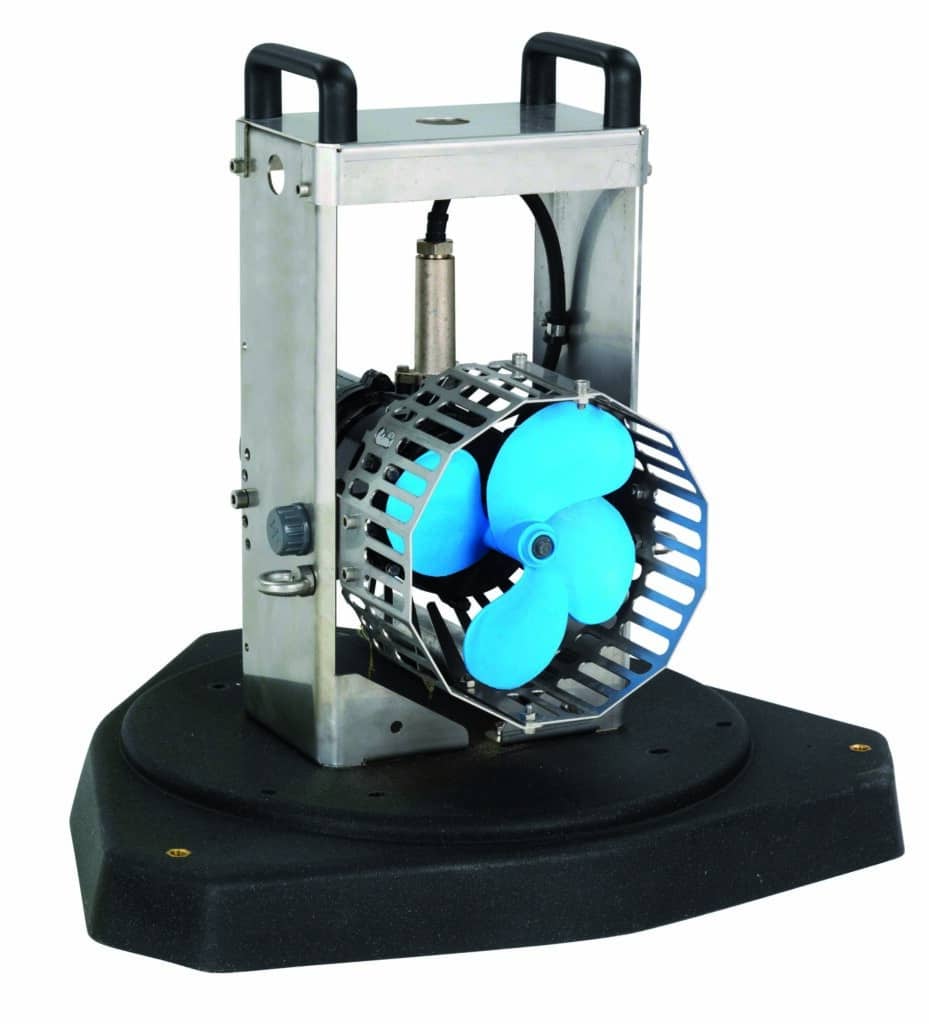
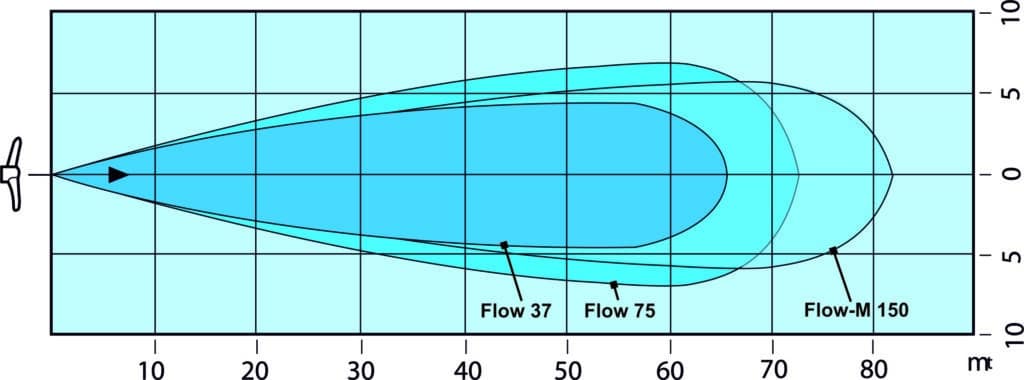
Flow Propeller Mixers are practically clog-free, the basket serves only to protect against inflowing branches and livestock. With low motor power, a large flow range is achieved.
Water aeration and degassing
Two floating S-FLOW 75 F volume aerators were installed to degas and aerate the pond, with a motor power of only 0.75 kW, 192 m3 of water per hour is pumped and aerated through each unit.
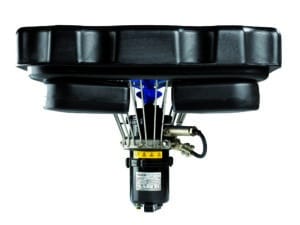
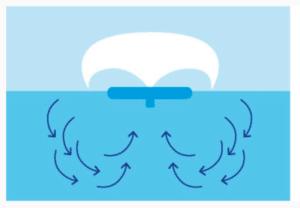
S-Flow floating volume aerator degasses water and enriches it with oxygen
The A1 Group has linked the fountains and mixers present to a weather station with a wind meter. The fountains switch off when the wind force is too high; the mixers are switched off separately if the wind direction impedes the flow of water.
Pumping against strong currents costs more energy and you can save on that, a practical and effective solution that A1 applied for this project.
The result did not take very long to materialize
Within 4 weeks of placing the devices, results were already visible, several months later this ring pond was free of floating duckweed and the water quality greatly improved.
With relatively low investment costs, Gro-Up’s wishes were fully realized.
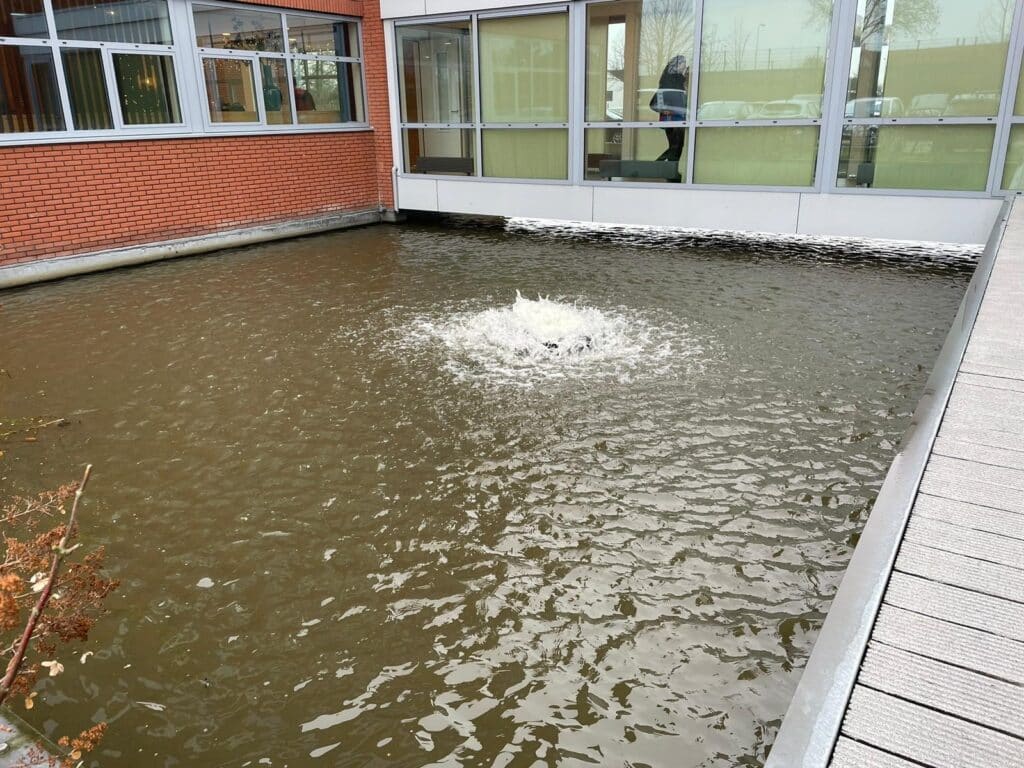
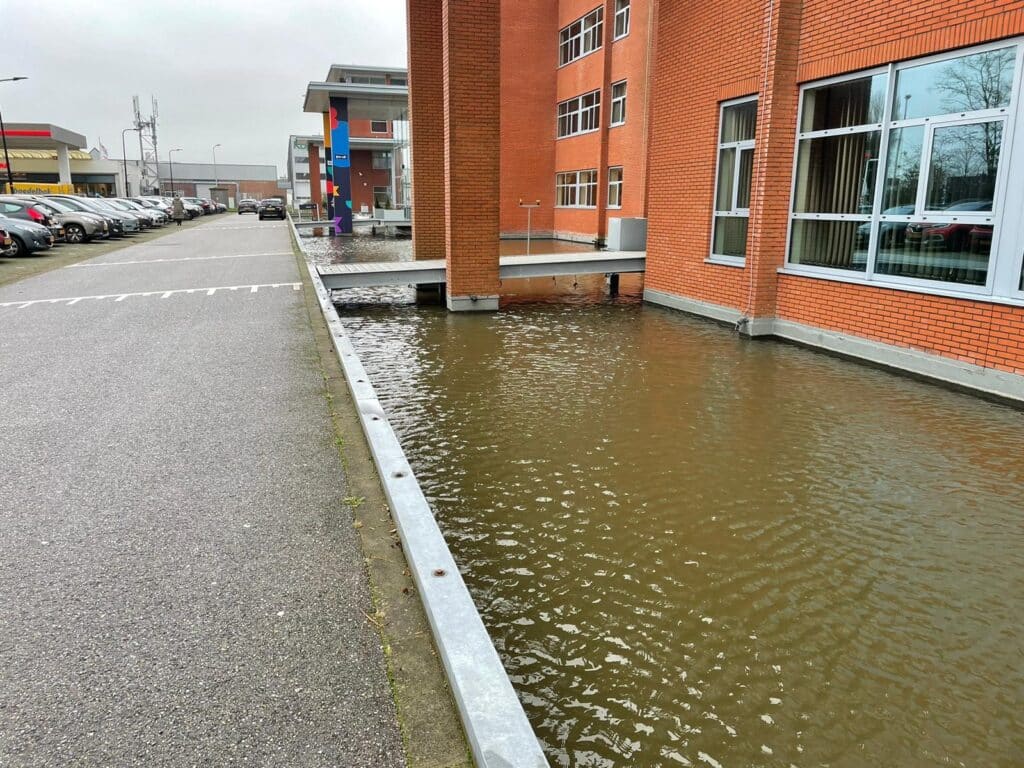
The ring pond at Gro-Up’s headquarters looks presentable again.
Do you also want to get rid of your duckweed problem, or do you have water quality problems?
Get in touch with us!