Buyshaven Enkhuizen, review of a successful project
Realized in 2018 in cooperation with Wildkamp Enkhuizen. Problem: Excessive algae blooms and smelly water in the harbor.
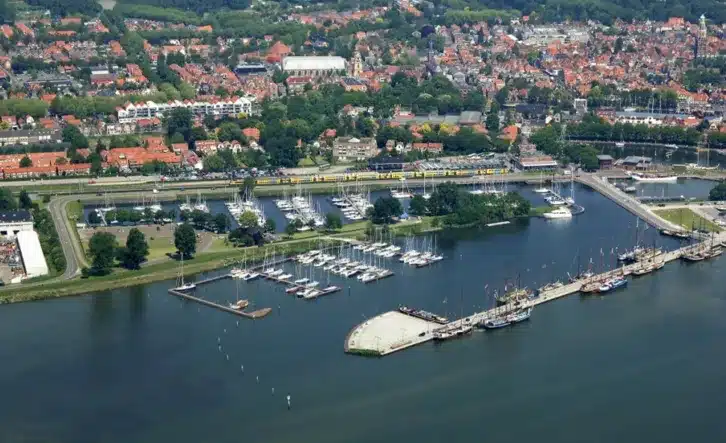
Hidden behind the NS railway station, is Enkhuizen’s best kept secret; the Buyshaven, green oasis close to the historic city center. Small-scale, atmospheric and friendly.
The inner harbor is sheltered behind the Krabbershaven, both harbors are enclosed between the Houtribdijk and a 1700 meter long dam protecting Enkhuizen’s harbors from the sometimes turbulent IJsselmeer water. Optimally sheltered, but thus the Buyshaven in particular lacks natural currents.
Stinky water and algal blooms
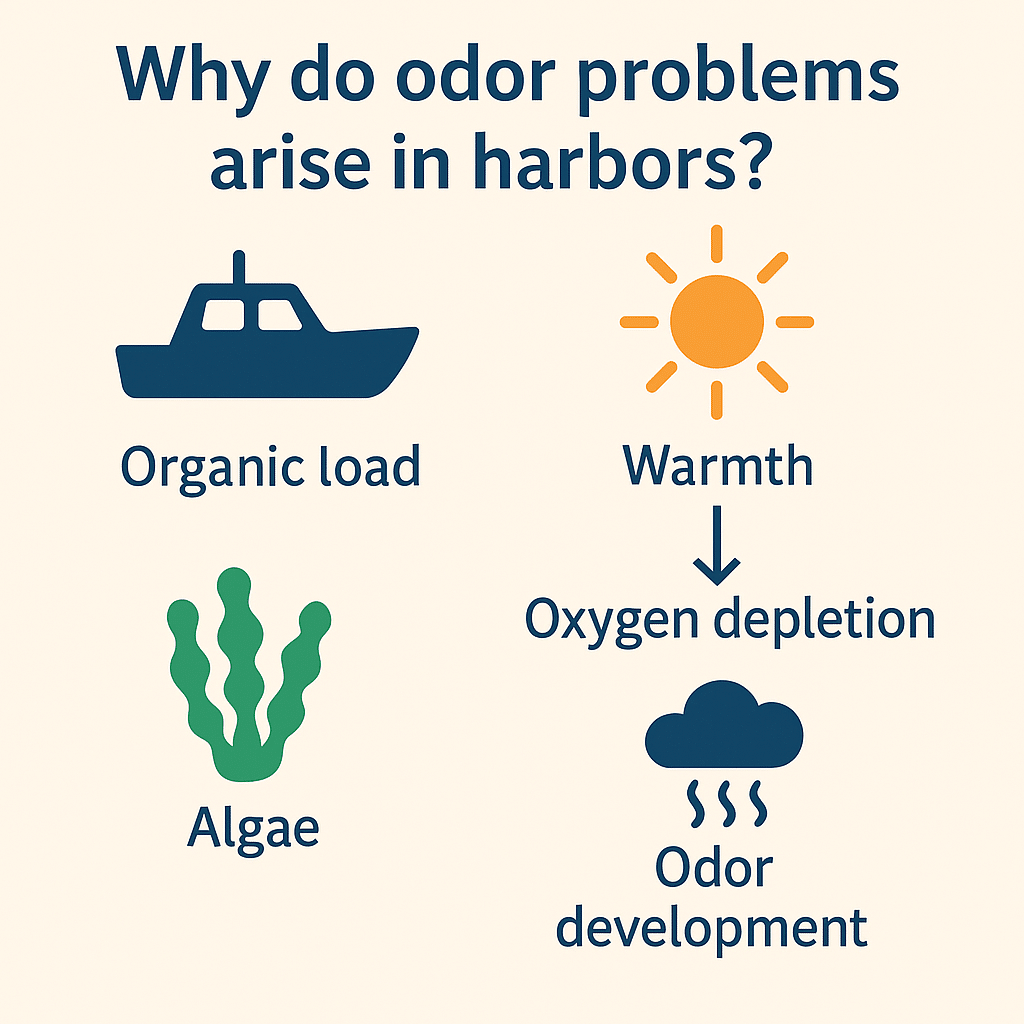
However, intensive recreational boating and water sportsmen created a large organic load on the harbor water. Due to lack of flow in the enclosed harbor, organic pollution accumulated in one corner of the harbor, resulting in excessive algae growth and smelly water, the harbor guests did not get happy.
The Buyshaven association was confronted with this and started looking for a solution. Through our partner Wildkamp in Enkhuizen, the association’s issue came to AUGA’s technical advisor.
Wildkamp is a technical wholesaler with 46 branches in the Netherlands and has been working with AUGA for 40 years in the field of recreational water technology, together we have been able to realize many beautiful projects.
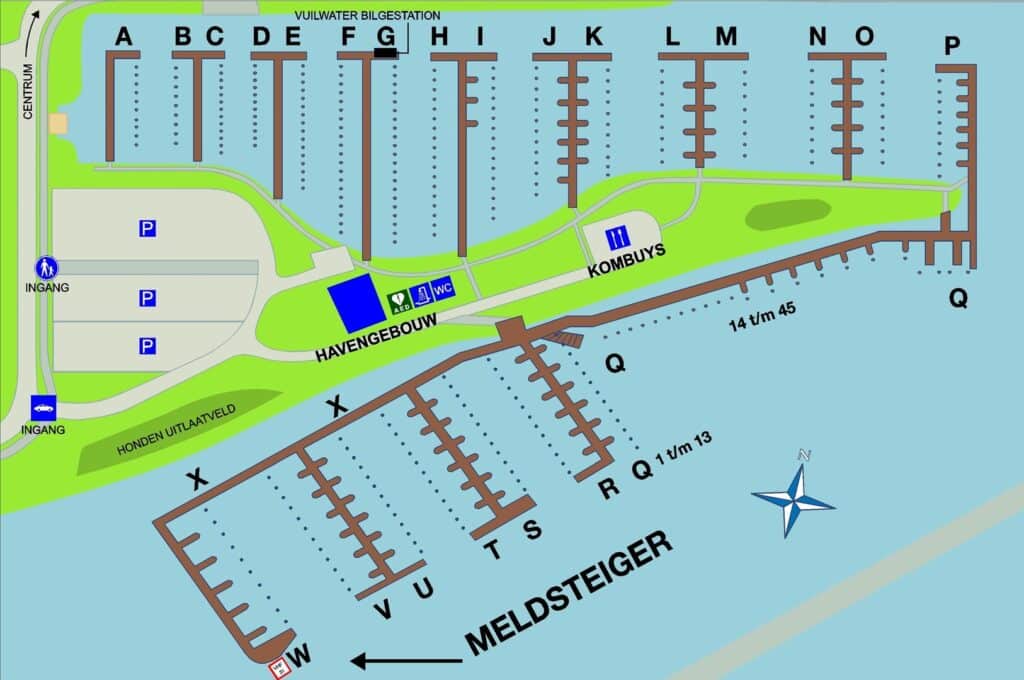
The port illustration makes it clear that accumulation of organic pollution occurs at jetty A, the deadcorner where there is no more flow.
Algae in a harbor indicates an ecosystem disturbance, often due to excess nutrients, which can lead to murky and green water. Blue-green algae, a specific species of bacteria also considered algae, can pose a public health risk and require swimmers to stay out of the water.
To combat excessive algae formation and improve water quality, increasing oxygen levels through aeration and exercise is an excellent solution.
Movement and aeration
Add movement and oxygen to the water to discourage algae and balance the ecosystem.
The modus operandi of AUGA
To gain insight into the issues, site visits are a regular feature. Observation and consultation with those involved gives an excellent picture of the situation, together with the client’s wishes the practical possibilities are identified.
Once all the data has been gathered, a no-obligation consultation with price quote follows.
Essential considerations include e.g. power supply, the size and depth of a harbor, and the most optimal location for placing one or more systems, in floating or fixed design, or tailored to local capabilities.
The solution is not complicated
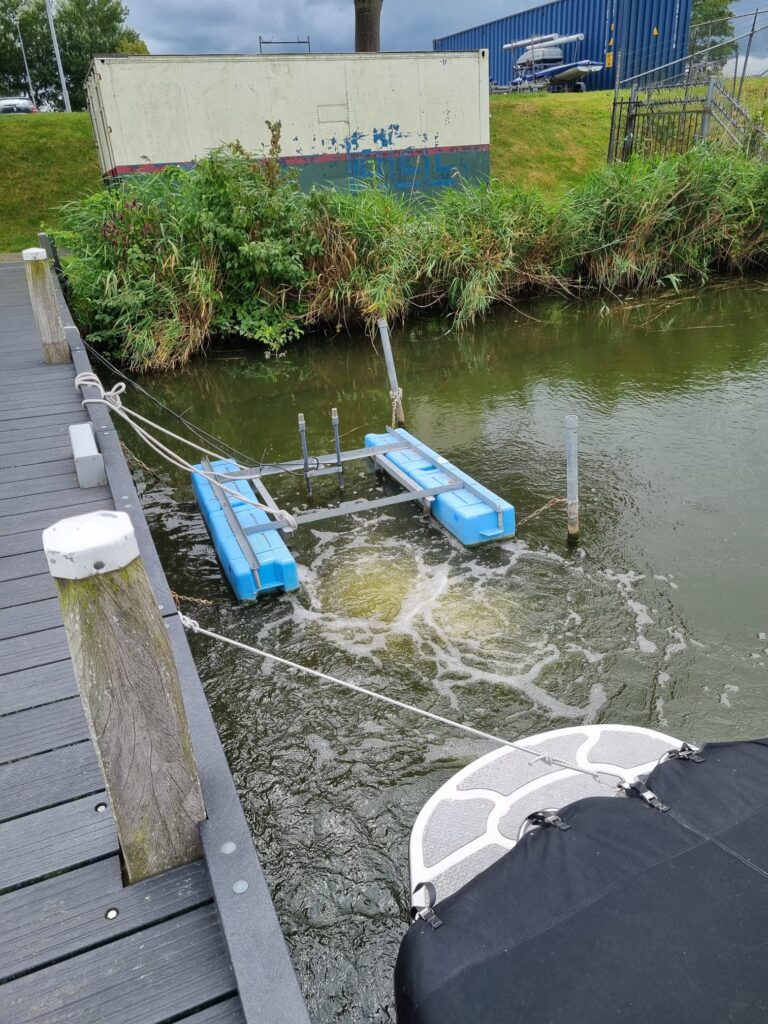
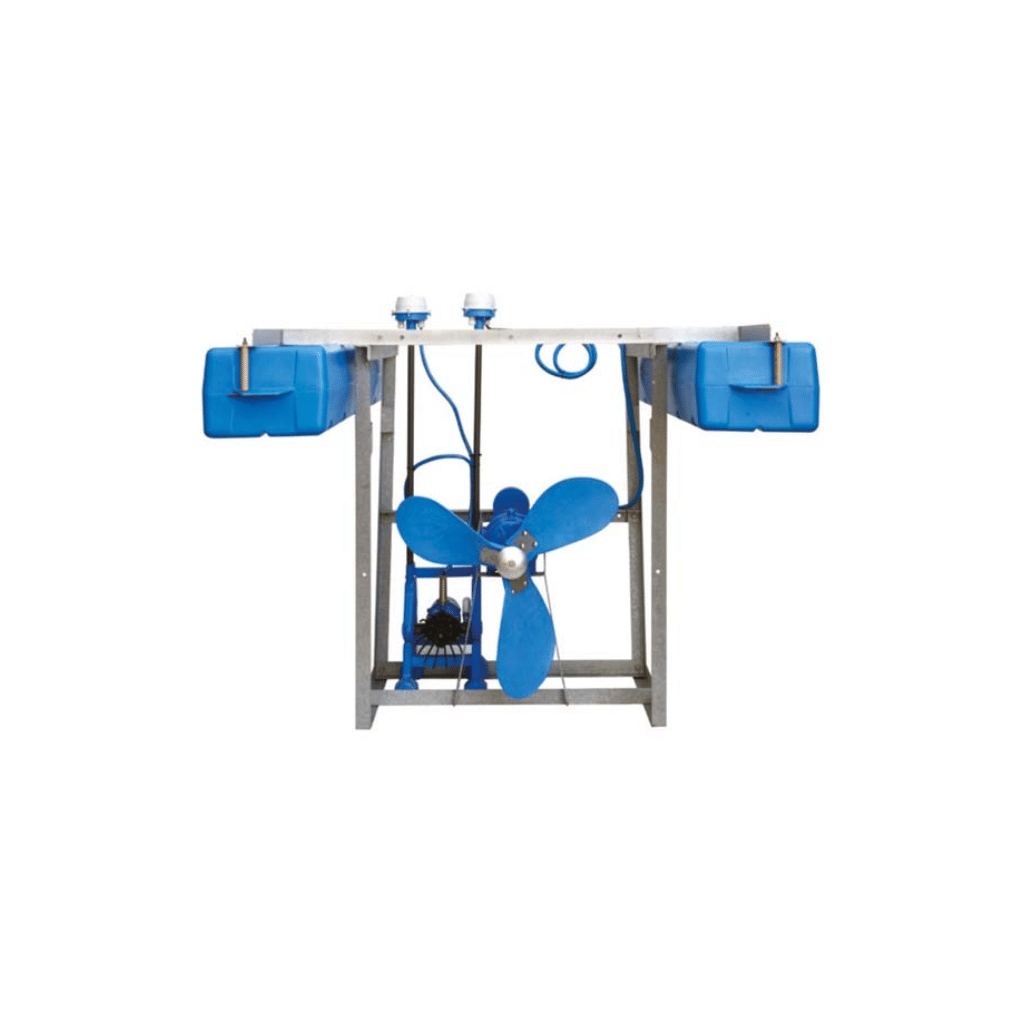
Given the depth and length of the harbor, a floating system MegaFlow-Combi was chosen. A system with 2 motors; a mixer and a mixer/aerator with effective propulsion up to 100 meters and only 2.6 kW of total motor power.
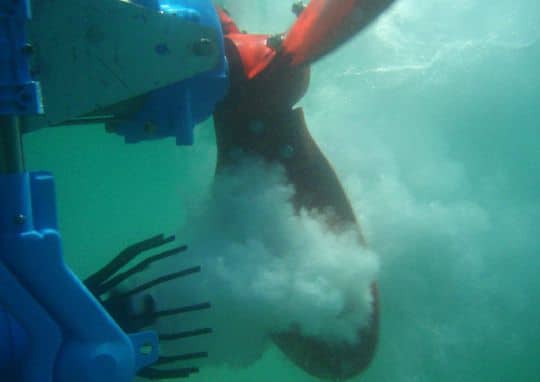
The flow mixes water layers and prevents algae blooms. The aerator injects a large volume of oxygen, which is completely carried with the flow of the mixer to further optimize water quality.
The installation was delivered ready-made for installation in 2018 and, as often happens, we hear nothing more about it.
2025….8 years on
Harbormaster Chris Verberne reports, the aeration pump no longer works and the attached zinc anodes have practically decayed.
We have the entire installation picked up by our transporter, in order to be able to optimally examine everything and take measurements in our own workshop.
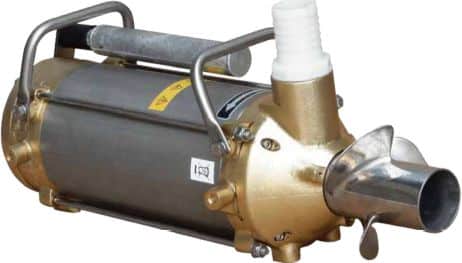
After measurement and examination, both motors are found to be fine after 8 years. The aerator motor has a damaged cable, which will be replaced.
Both engines will be fitted with new seal kits and new zinc anodes, not a costly overhaul of a plant that has been in operation for so long.
Zinc anodes, also called sacrificial anodes, are rods of zinc used to protect metal parts from corrosion (eating away) through an electrochemical process.
These are especially effective in brackish/salt water, where they take on the role of cathode and slowly sacrifice the zinc to protect steel from electrolytic corrosion. All of AUGA’s propeller pumps are suitable for use in brackish/sea water.
The harbor master speaking
We speak to Harbormaster Chris after the delivered MegaFlow has had its very first service and ask him if the installation has met expectations over the past eight years.
Chris tells” The blind spot in the harbor was always a problem situation. Dirt accumulated there and over time formed a thick, smelly crust. That is not a calling card for our busy marina.
We contacted technology supplier Wildkamp from Enkhuizen and from that resulted the delivery of this device , which has now done its job for 8 years, without a hitch.
It is a compact floating system that you do have to anchor well, because there is a considerable thrust from the large propeller. The thick crust of dirt disappears in no time; we found that quite remarkable.
We usually only turn on the big mixer, that big thrust comes from a motor of only 1.5 kW . More is also not necessary, the advantage is that this can still be connected to 230 V mains, which is always present in a port.
The aerator motor is switched on to bring more oxygen into the water during hot, summer days. Of course, there are not always those in our country.
We are very satisfied with the device, which has been in operation for so long.”
An annoying problem in this marina was solved relatively easily with the deployment of 1 floating system that takes up little space, requires little maintenance at low investment cost.
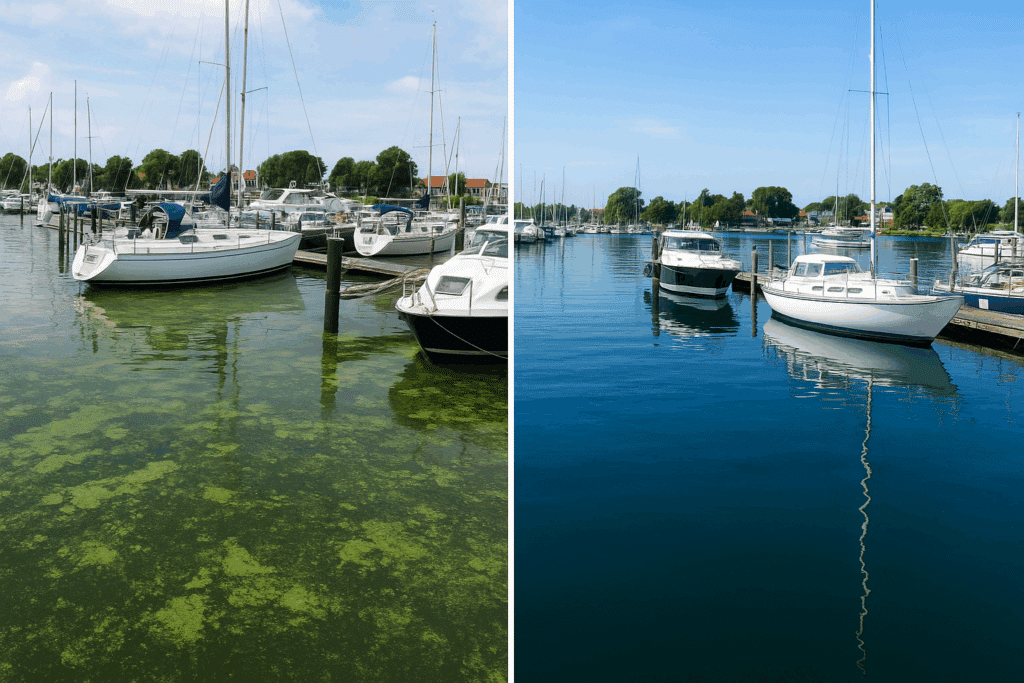
Example of a harbor with a lot of algae formation, which disappear after deployment of a MegaFlow -Combi mixer/ aerator.