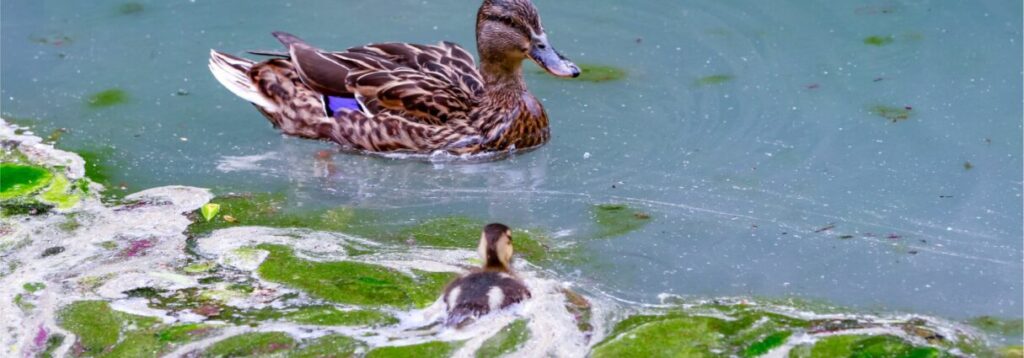


Unfortunately, blue-green algae is an increasingly common problem. Warming – often stagnant – water becomes a source of nuisance, causing smelly water, lack of oxygen, mosquito infestations and even, therefore, blue-green algae.
What are blue-green algae?
Blue-green algae are microscopic small organisms found in freshwater. When the cells break down, the algae turn blue. A large amount of them is a sign that the water quality is poor.
Some blue-green algae are toxic. If you swim in contaminated water, the toxins enter your body and you can get sick. Children are especially vulnerable because they may unknowingly ingest sips of water. Pets can also become seriously ill from drinking contaminated water or licking their infested fur.
The presence of blue-green algae can even lead to a ban on swimming, a measure we are hearing more and more in the news.
Improving water quality prevents problems
Movement and aeration of water is crucial for improving water quality, contributes to better biodegradation of organic matter in the water and improves oxygenation.
By mixing water layers and adding oxygen, water quality is significantly improved, temperature reduction takes place and algae does not have a chance to develop further.
For this purpose, AUGA builds aerators and mixers. These propeller pumps – in floating or stationary versions – can move and aerate large bodies of water with little power.
With permanently set up devices that start operating early in the year, you keep water quality in balance. It is not even necessary to keep the devices in continuous operation.
Want to know more? Contact us.