

 Terug naar categorieën










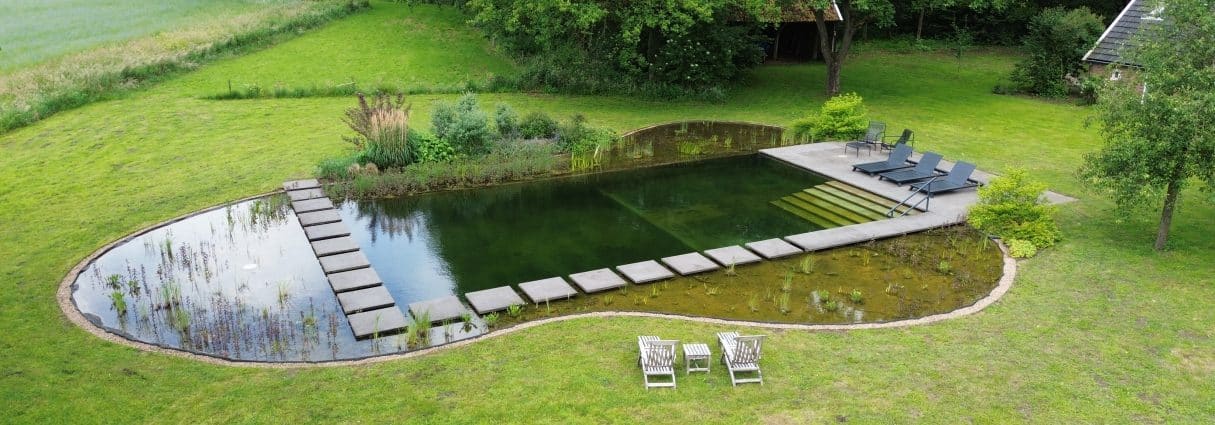
Naturally swimming in your own garden
Naturally swimming in your own garden
A swimming pond offers more than just refreshment on hot summer days. Swimming in natural, living water is a revitalizing experience. Enjoying the fresh appearance of water, plants, and nature, without the typical chlorine smell of a traditional pool.
In addition, a swimming pond is a special addition to a garden. Aquatic plants attract insects and other animals and, together with the natural surroundings, create a lively whole.
How is a swimming pond purified?
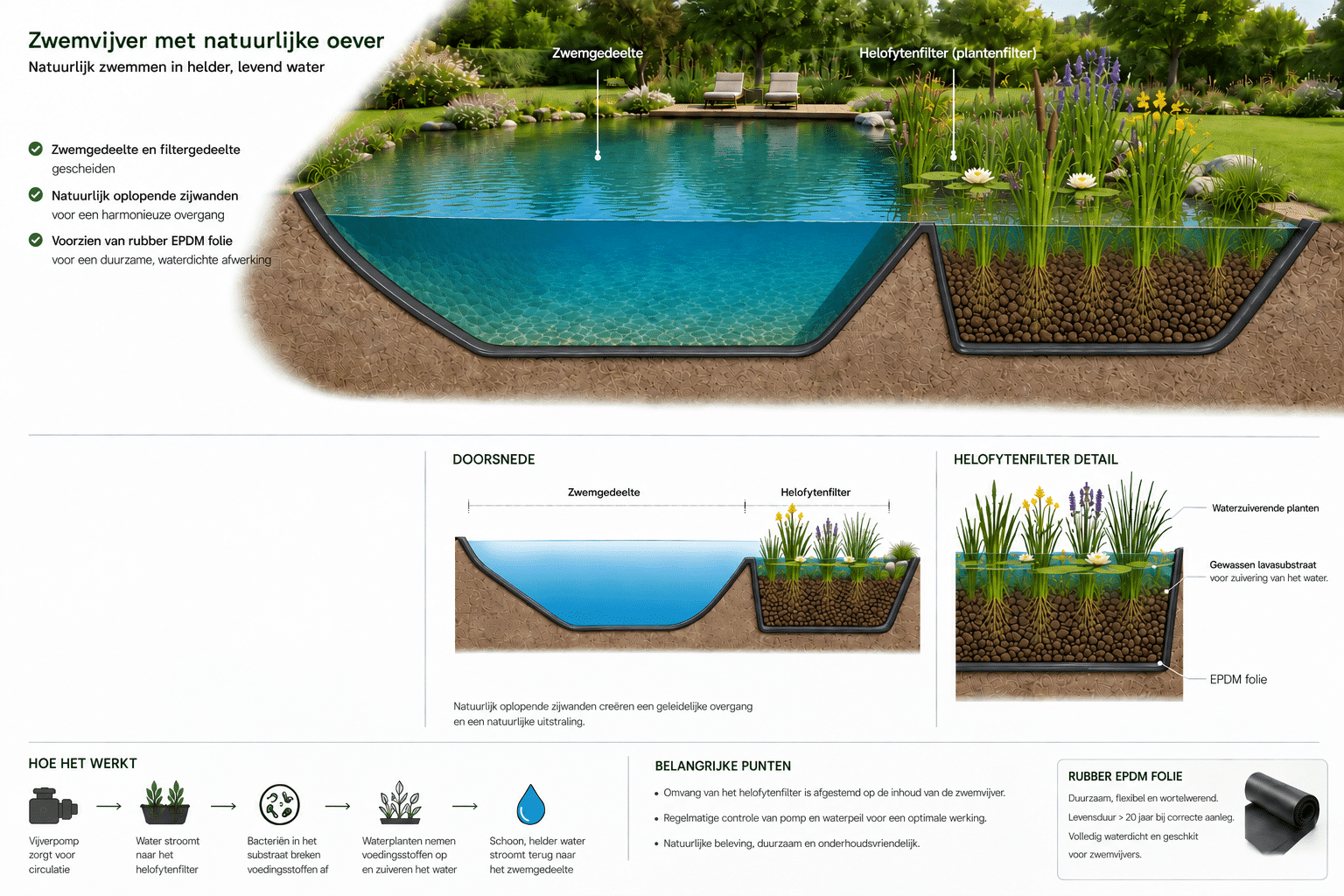
The biological water purification of a swimming pond is done using a plant filter, also known as a helophyte filter. This is a separate, distinct filtration system that consists of, among other things, lava and water-purifying plants.
The water flows through the lava bed, creating a habitat for bacteria that play an important role in breaking down and processing organic materials. The aquatic plants support this natural purification process.
Thus, lava, bacteria, and plants work together for clear and healthy water quality.
The right ratio is important
For a well-functioning swimming pond, it is important that the helophyte filter has sufficient capacity in relation to the volume of the swimming pond. Therefore, the size of the filter is an important part of the design.
Water circulation is provided by a pond pump. This pump moves the water and ensures that the water is directed through the filtration system.
In essence, the system is surprisingly simple: a well-designed swimming pond, a suitable helophyte filter, and a pond pump together form the basis for naturally purified swimming water.
A natural alternative to the pool
A swimming pond combines the best of both worlds: the ability to swim wonderfully and the beauty of a natural pond. Not a standard ‘blue box’ in the garden, but a living ecosystem that can be enjoyed throughout the year.
Great freedom in shape, construction method, and size
In fact, any shape and size is possible, unlike preformed polyester pools. A swimming pond can therefore be built entirely in accordance with the wishes and possibilities of the customer.
There are various options for building a swimming pond, the most common are mentioned below.
Organically shaped swimming pond, without structural construction
The simplest method is to lay EPDM pond liner with an underlay directly on a dug-out hole – with a selected sand bed for stabilization. This is the cheapest method with the most natural design. Since it is not a structural construction, approval from the municipality will be easier.
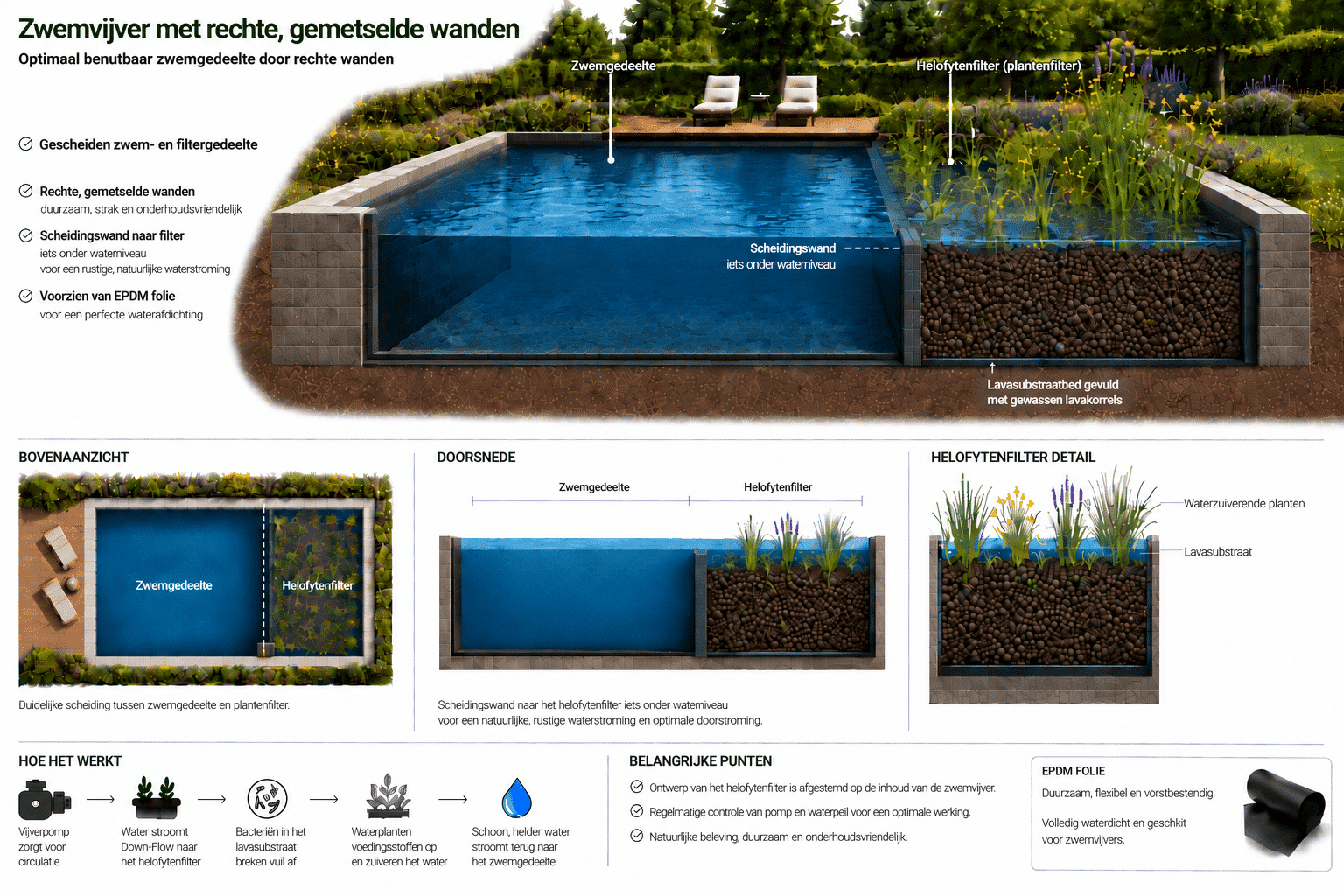
The free swimming space is smaller if a swimming pond has straight walls, as the side walls must slope upwards. This construction method takes up more garden space than a pond with straight walls, with a comparable swimming area.
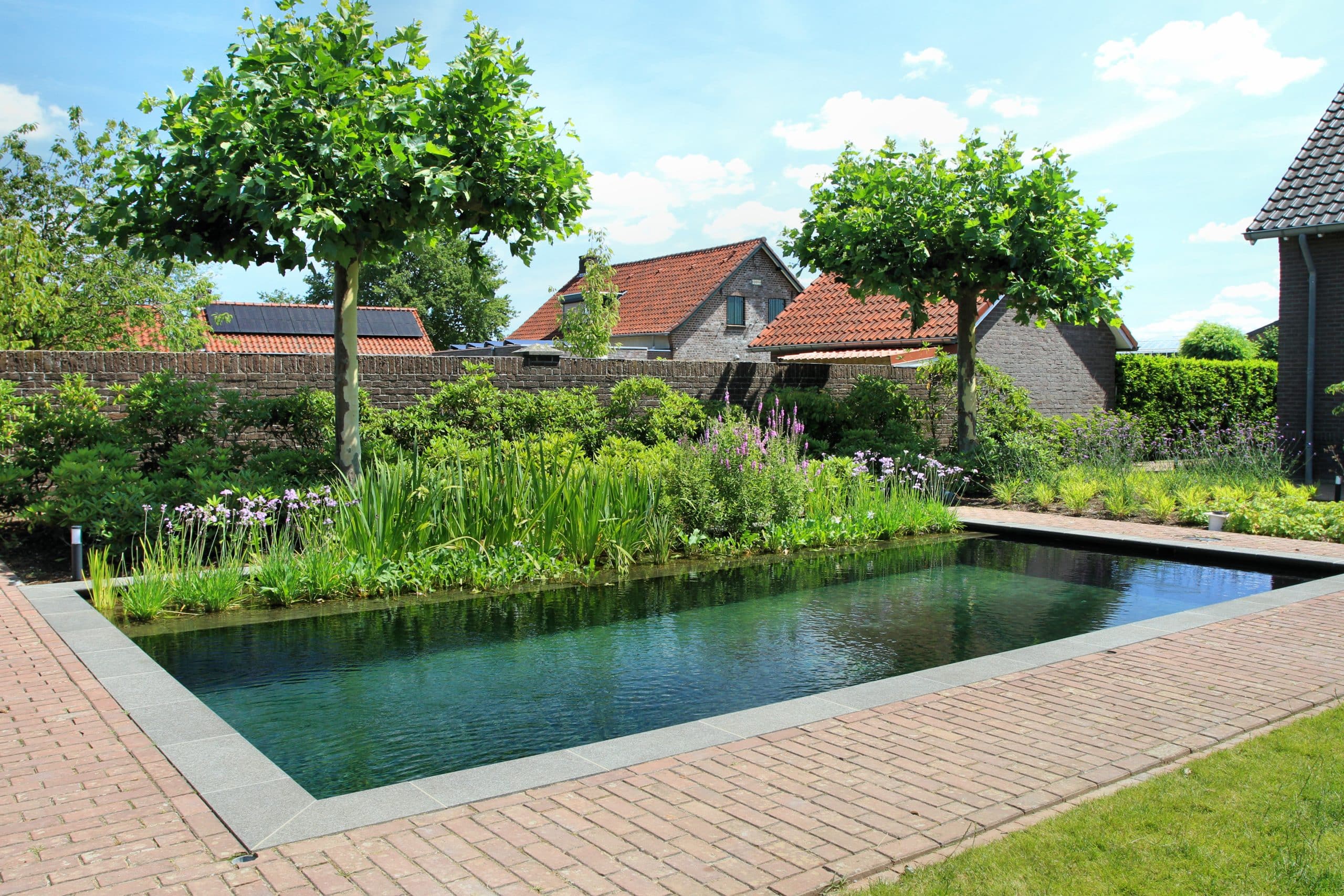
This is the most common design. It offers an optimally usable swimming area combined with a particularly robust construction.
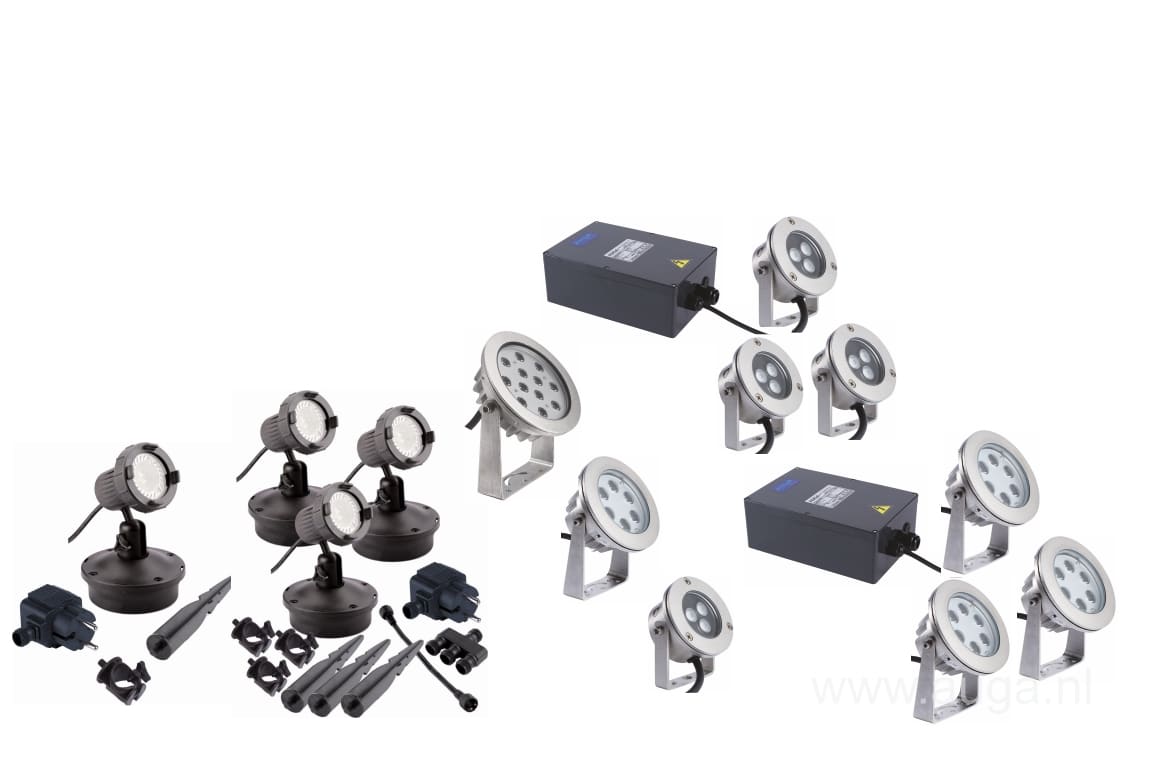
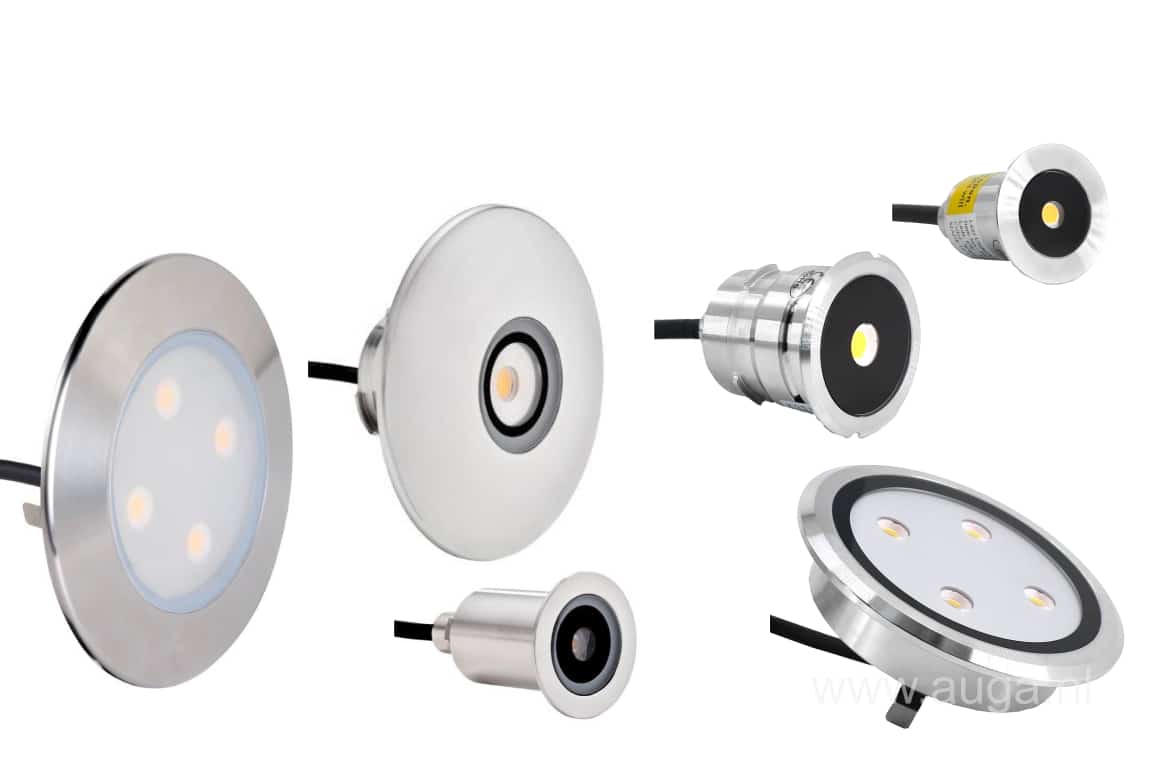
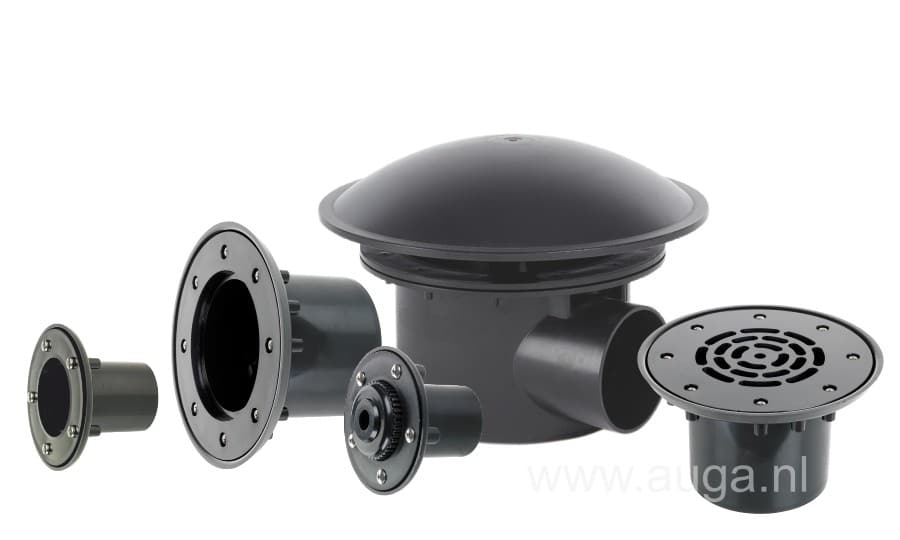
This construction method provides plenty of convenient options for integrating technical fittings, such as wall inlets, skimmers, built-in lighting and wall penetrations for connecting inlet and outlet pipes, as well as an automatic water top-up system.
A rectangular swimming pond can be built using various construction methods. Some examples include:
- Brick-built walls
- Stackable concrete blocks
- Concrete retaining walls
The waterproof lining consists of EPDM pond liner. This exceptionally strong and elastic material contains no toxic substances, making it an environmentally friendly choice.
The rubber liner is dark grey to black due to the raw materials used. An additional advantage is that it absorbs sunlight, naturally warming the water by a few extra degrees. This means you can enjoy a pleasantly higher water temperature at no additional cost.
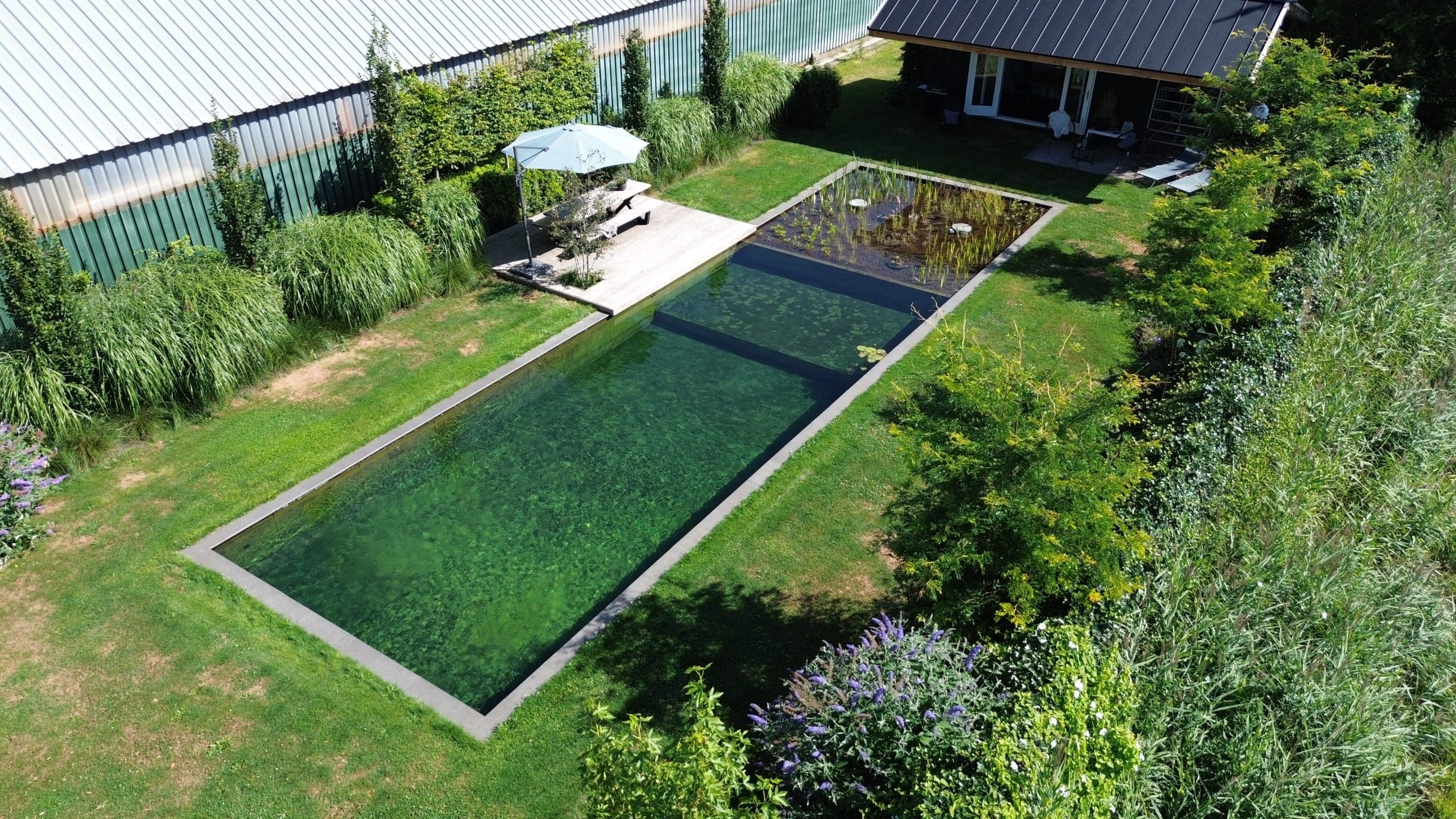
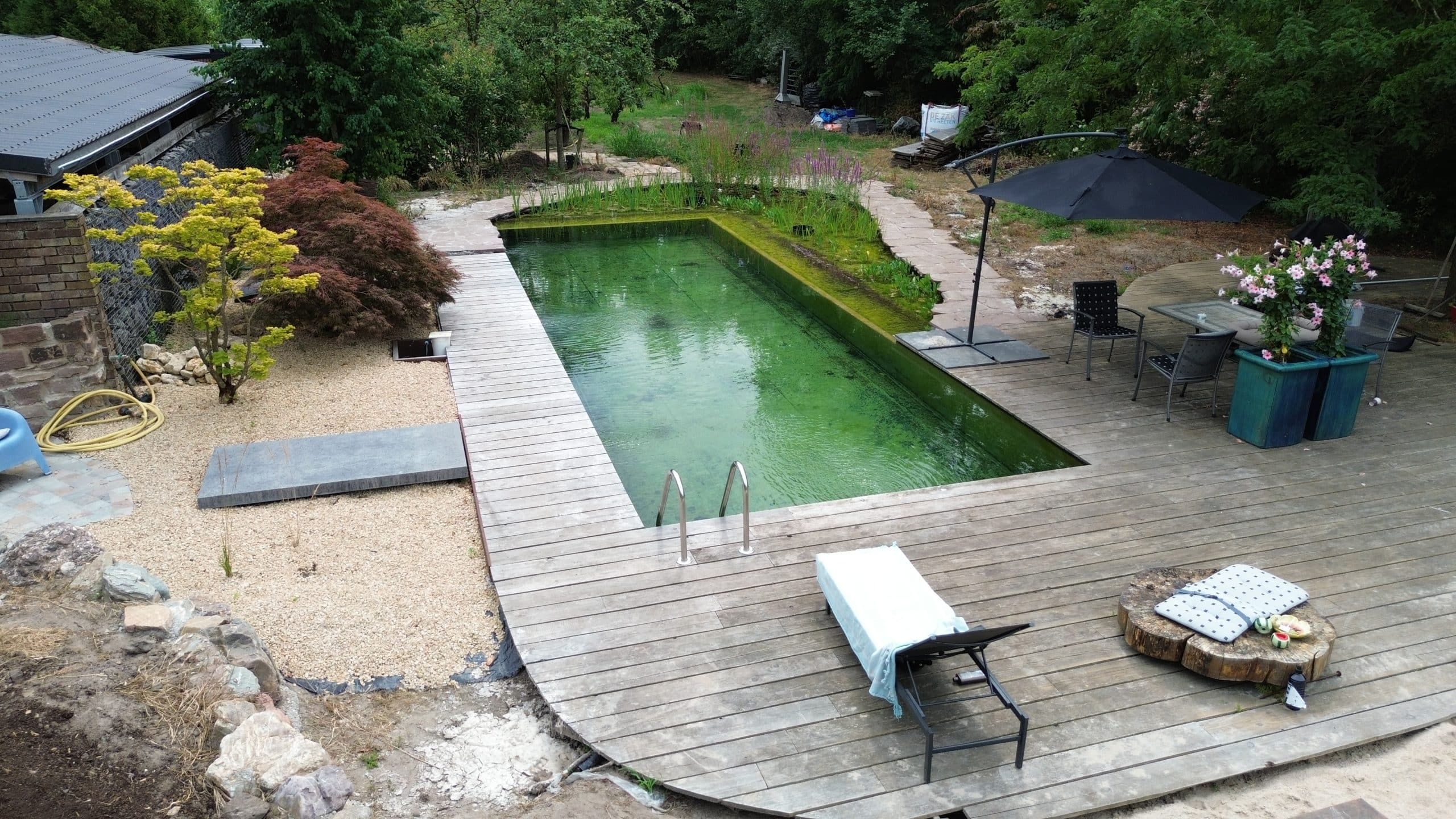
Architecturally Constructed Swimming Pond with an Organic Design
The formal, rectangular swimming area is integrated into an organically shaped pond, creating a harmonious overall design that blends seamlessly into its natural surroundings.
The EPDM liner runs almost invisibly beneath the edging of the swimming area and also forms the base of the plant filter. Openings in the edging allow natural water circulation between the plant filter and the swimming area.
This creates a beautiful combination of the clean, architectural lines of the swimming area and the natural appearance of an organically shaped swimming pond.
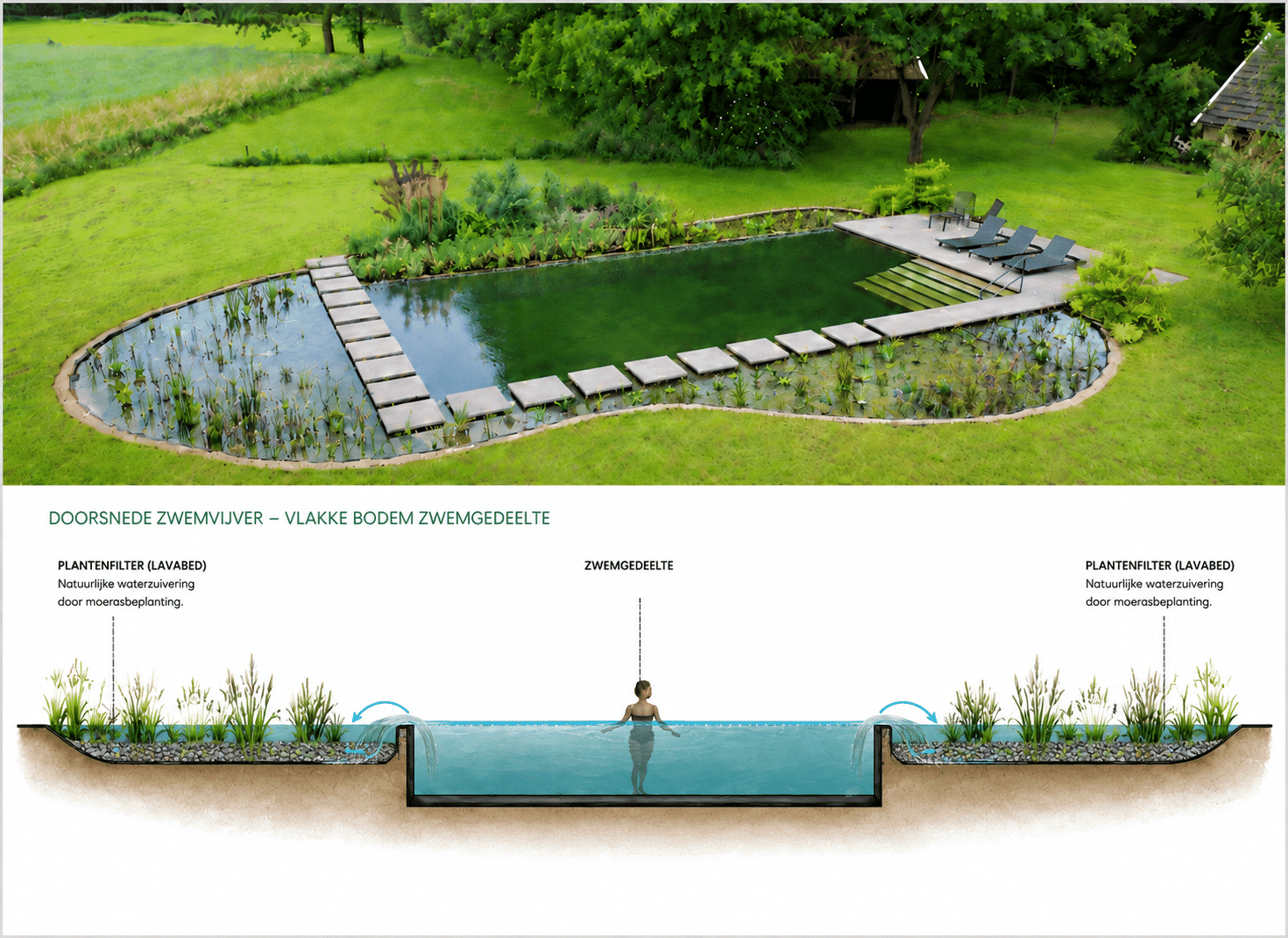
A clear and healthy swimming pond starts with a well-designed plant filter. The filter is the heart of the natural water purification system and ensures that the water is purified through biological processes. The correct balance between the swimming area and the plant filter, carefully selected aquatic plants and a properly constructed filter bed of thoroughly washed lava form the foundation of an effective filtration system.
There are several ways to circulate water through a plant filter. The two most commonly used systems operate according to either the Down-Flow or Up-Flow principle. Below, we explain how Down-Flow filtration works and the role played by the plant filter, aquatic plants, bacteria and lava filter bed.
How Down-Flow Filtration Works
Down-Flow filtration is one of the most natural ways to purify swimming pond water. With this method, purification is largely carried out by biological processes that naturally take place within the plant filter.
The pond pump ensures continuous water circulation throughout the entire swimming pond system. Water is pumped to the upper part of the plant filter, from where it slowly flows downwards through the filter bed.
During this process, suspended particles and nutrients carried by the water enter the plant filter. The aquatic plants and bacteria living in the lava filter bed then work together to support the natural purification process.
The Lava Filter Bed as a Biological Filter
A properly constructed lava filter bed is essential for effective biological filtration. The depth and composition of the filter bed must be sufficient to ensure optimal performance.
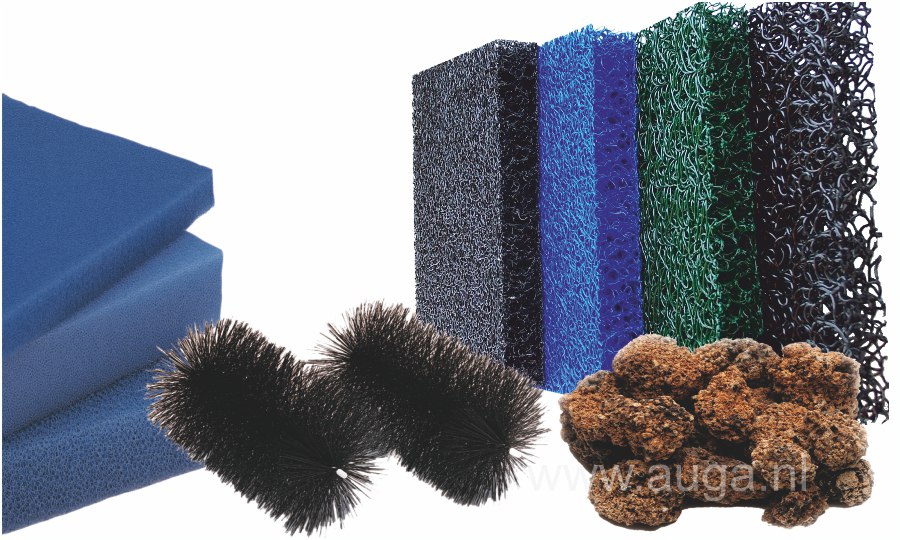
Lava granules provide a large surface area on which beneficial bacteria can establish themselves. These bacteria play an important role in breaking down and processing organic matter and nutrients present in the water. This creates an active biological system within the plant filter that continuously contributes to maintaining water quality.
Aquatic plants also play an important role in this process. They absorb nutrients from the water while simultaneously providing a natural habitat for the biological system within the filter.
From the Plant Filter to the Technical Chamber
From the drain collector, the purified water is directed towards the technical chamber. This is where the pond pump is located, circulating the water throughout the system once again. By positioning the pump outside the swimming pond, the electrical installation remains easily accessible, allowing the system to be maintained safely and conveniently.
Why a Technical Chamber?
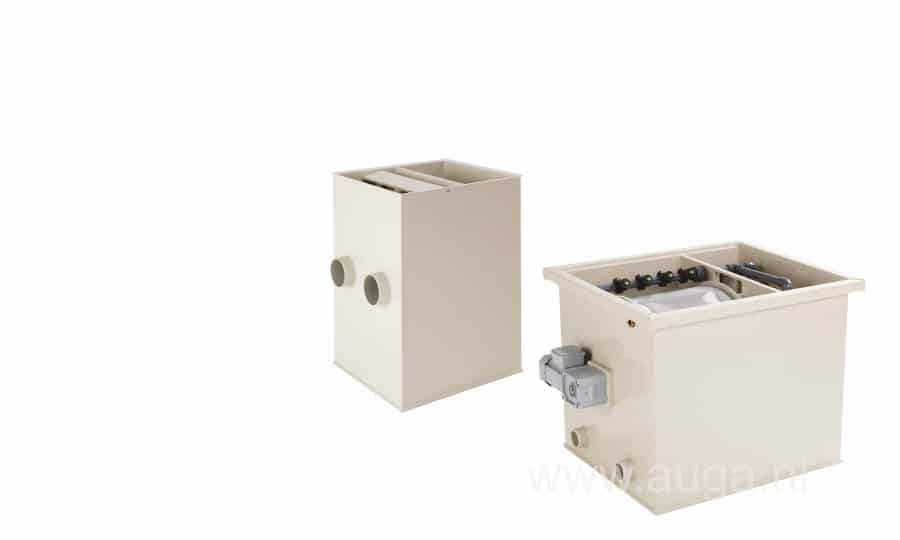
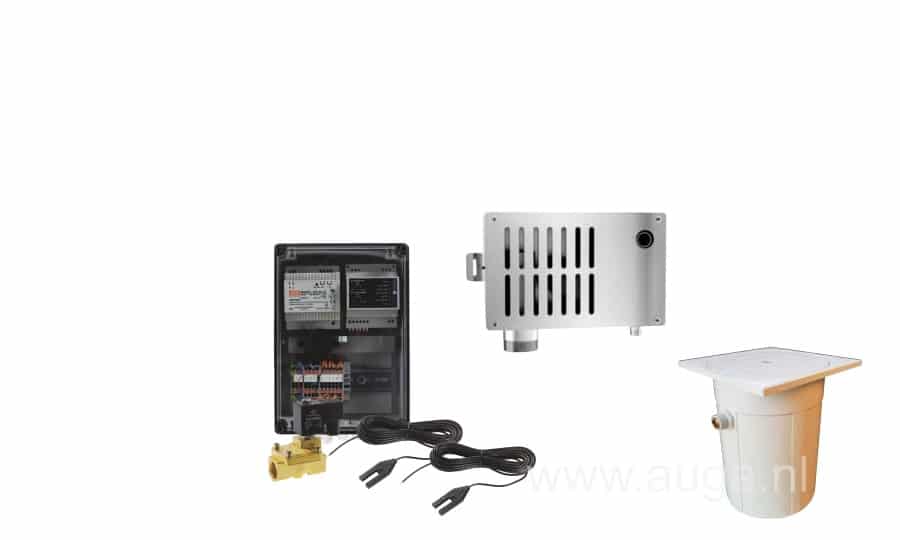
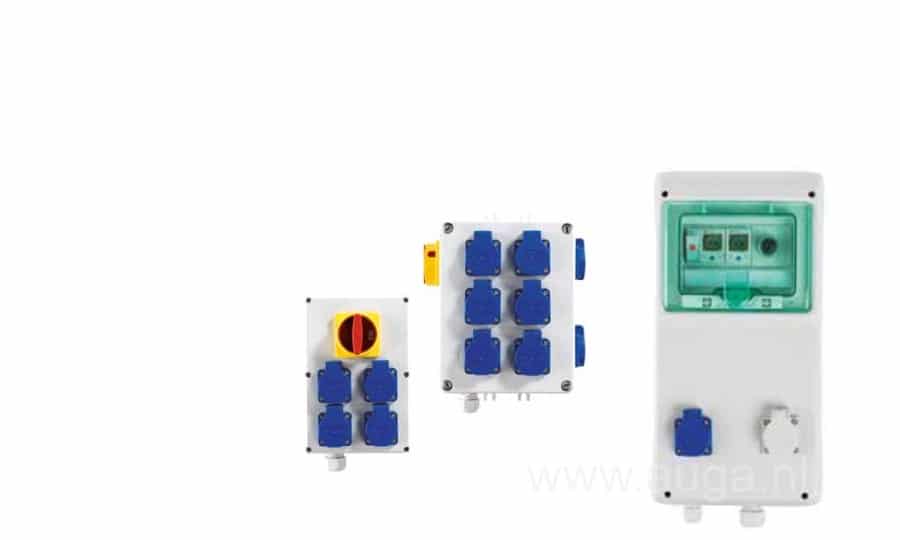
For both practical and technical reasons, a dedicated technical chamber is the preferred solution. Electrical equipment can be installed here in an organised and easily accessible manner. Depending on the design of the swimming pond and the applicable safety regulations, other technical components can also be housed in this chamber.
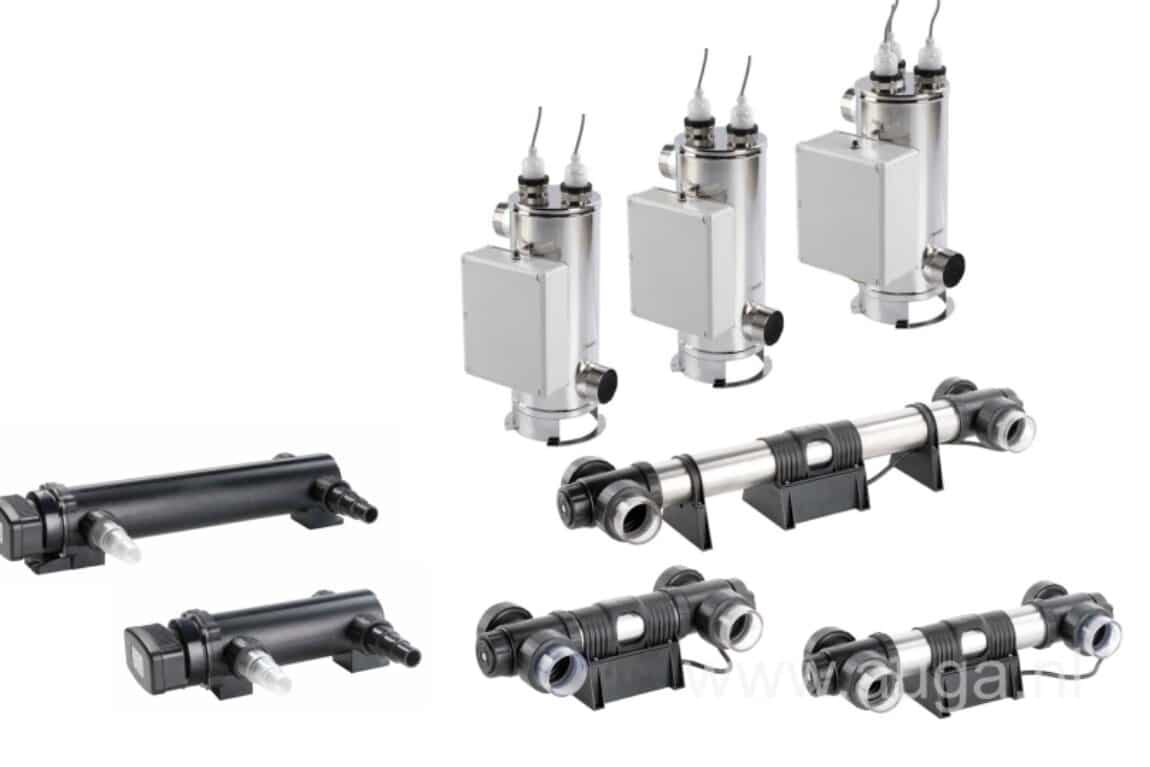
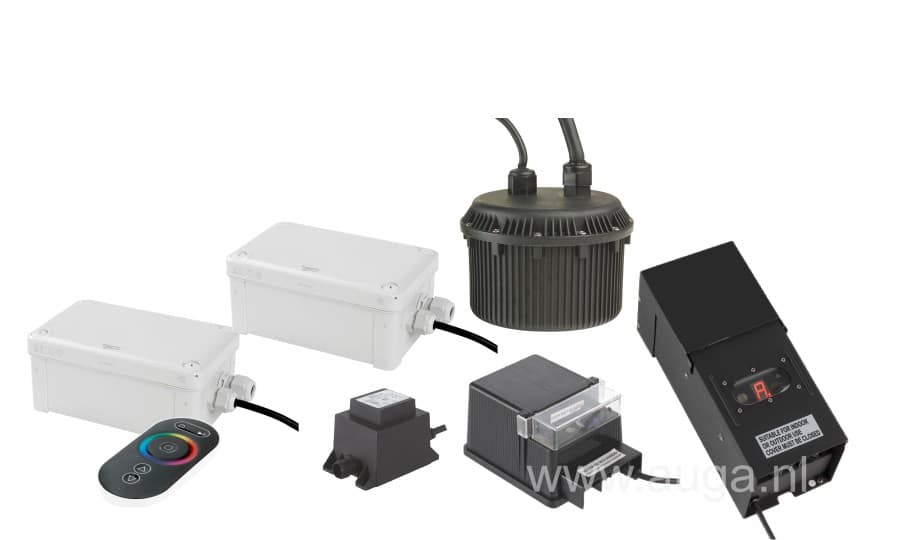
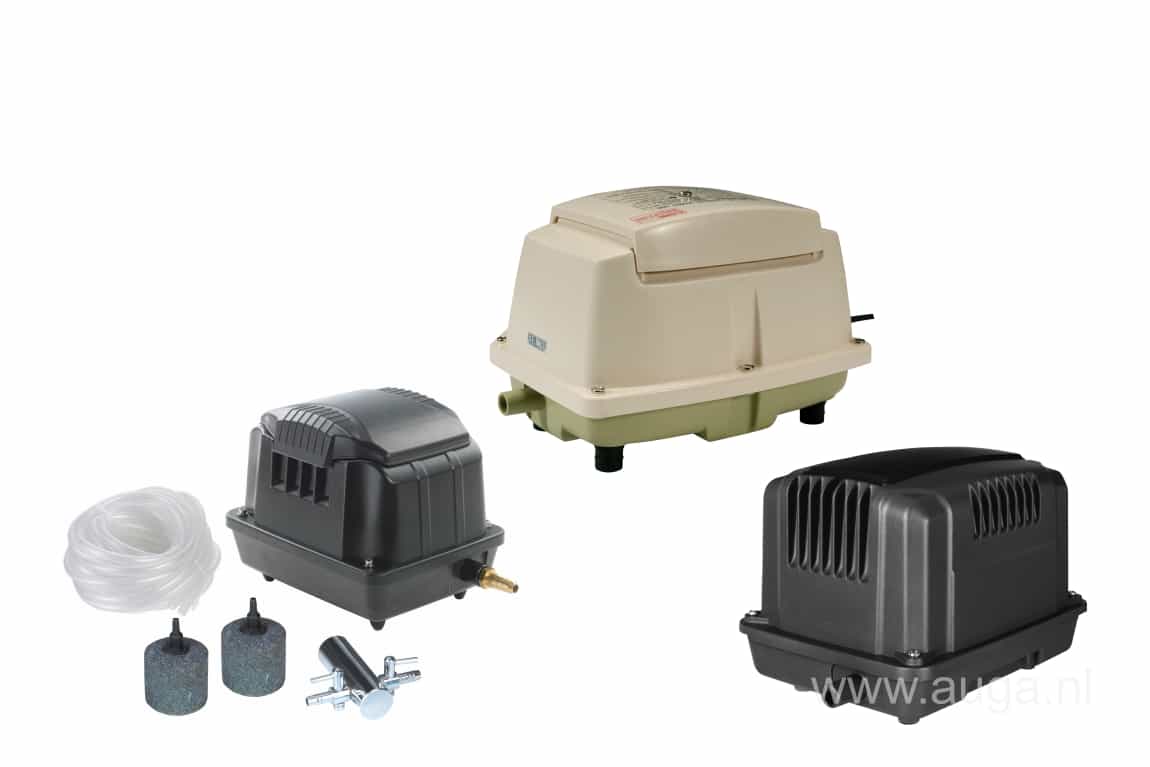
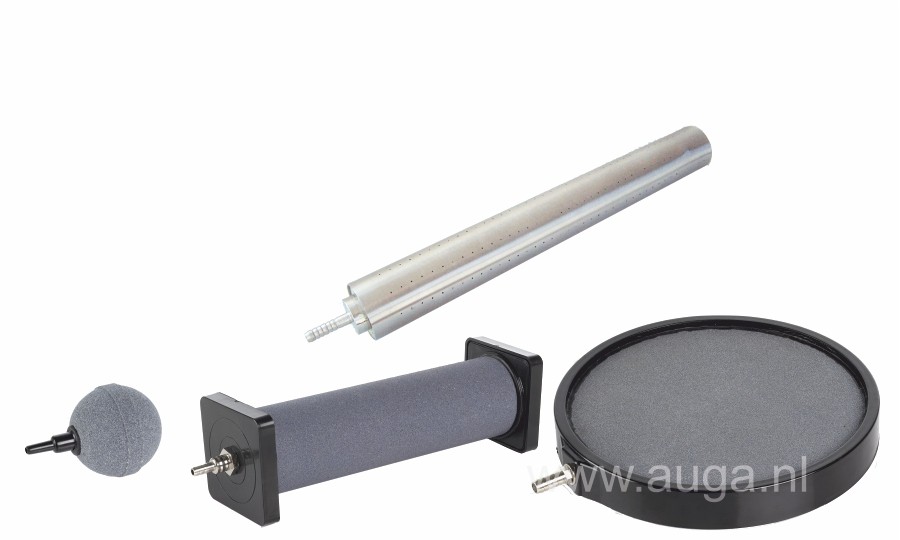
Examples include a UV-C unit, which can be used to combat suspended algae in the water. An air pump can also be installed to provide additional aeration to the plant filter. In addition, a transformer for underwater lighting can be housed in the technical chamber.
By centralising these technical components in one location, you create a well-organised installation that is easily accessible for inspection, maintenance and any future modifications.
Important: Electrical installations around swimming ponds must always comply with the applicable safety regulations. The exact possibilities for installing electrical equipment and pumps depend on the design of the installation and the relevant electrical safety zones.
This Creates a Continuous Natural Filtration and Circulation Cycle
- Minimal technical equipment
- Fully biological water purification
- Low installation costs
Click on the image below to see how the system works in detail.
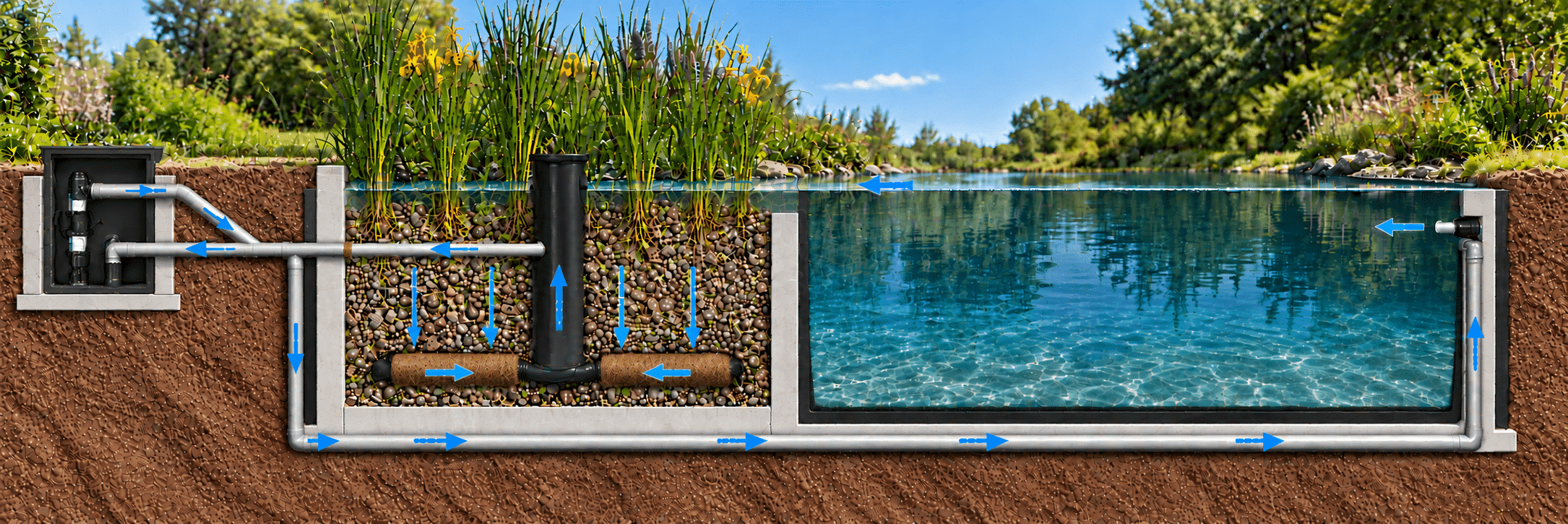
The Up-Flow system is the most efficient filtration process for a biologically purified swimming pond.
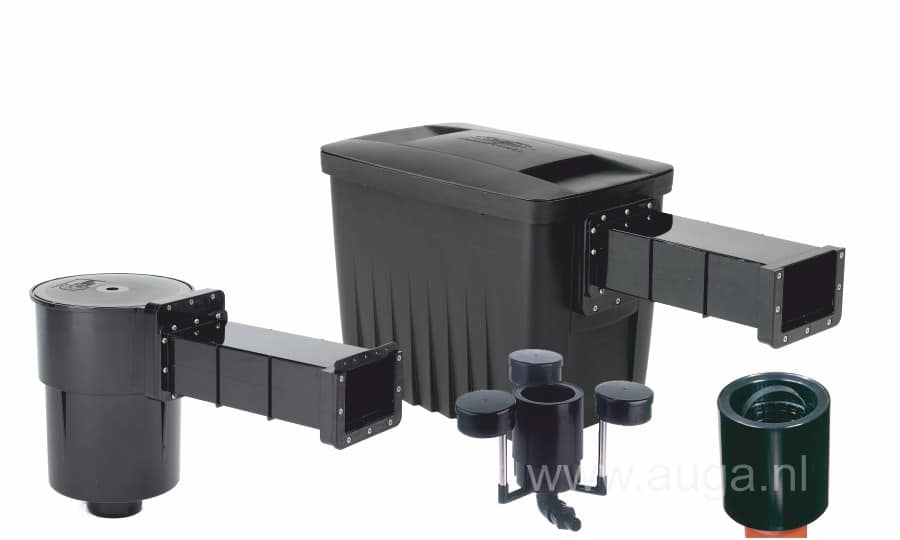
Twigs, leaves and dust can account for up to 80% of windblown floating debris. Technology is used to capture this debris before it can sink to the bottom, significantly reducing the maintenance required for the swimming pond.
Optimal Filtration and Circulation
Floating debris, together with incoming surface water, is directed through a wall-mounted skimmer towards the technical chamber. There, the water first passes through a curved sieve, which separates larger debris from the water.
This mechanical pre-filtration significantly reduces the load on the plant filter.
Depending on the design, a wall-mounted skimmer can be combined with bottom drains. This creates optimal water circulation and ensures that debris is efficiently transported to the filtration system.
The pre-filtered water is then pumped to the bottom of the plant filter. From there, it flows upwards through the filter bed. During this process, the final stage of biological purification takes place. The purified water then flows back into the swimming pond.
This is the Up-Flow circulation and filtration process: a carefully designed combination of mechanical and biological filtration, optimal water circulation and reduced maintenance.
A UV-C unit can also be incorporated as an additional filtration component to help control suspended algae and provide extra support in maintaining clear water.
The Benefits
- Mechanical and biological filtration
- Optimal water circulation
- Larger swimming area
- Less maintenance
- Efficient pre-filtration
- A clean and clear swimming environment
Click on the image below to see how the system works in detail.
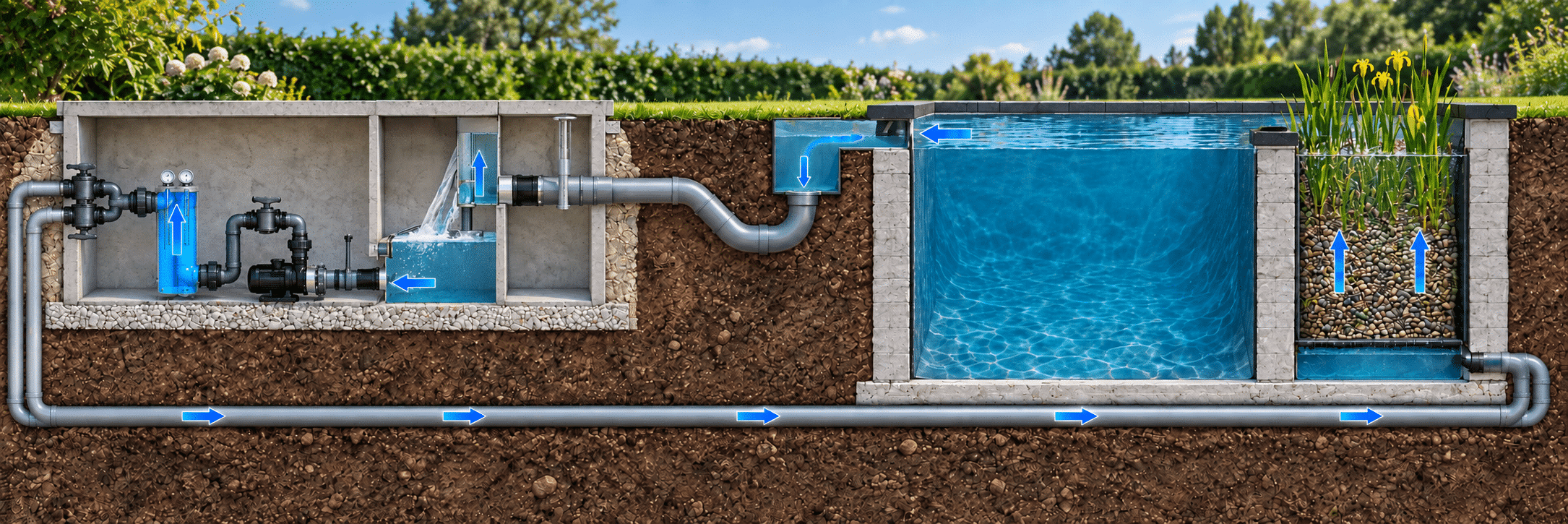
Building a swimming pond requires careful preparation. During the planning phase, various aspects of the construction process need to be taken into account. Once the swimming pond has been completed, many things are no longer easy to change.
The wishes of the future owner, combined with the creativity and technical expertise of the installer, ultimately determine the final result. That is why it is important to have a well-thought-out plan and a clear cost estimate in place before the first spade goes into the ground.
This includes considering the following aspects:
- Desired shape and dimensions
- Location and available space
- Water circulation
- Position of skimmers and any bottom drains
- Dimensions of the plant filter
- Technical chamber and equipment installation
- Choice of materials and finishing details
The result is a swimming pond that is not only beautiful, but also functions efficiently, is easy to maintain and provides years of enjoyment.
Good planning from the outset leads to better results in the end, benefiting both the contractor and the owner.
Do It Yourself or Hire a Specialist?
If you are particularly handy, you can certainly accomplish a great deal yourself. However, a swimming pond is a construction project involving many different areas of expertise.
If you want to enjoy your own swimming pond safely and for many years to come, we recommend hiring a specialist.
Further information can also be found in our brochure about swimming pond construction.